
Soviet art represents one of the most complex and fascinating chapters in art history, spanning from the revolutionary fervor of 1917 to the collapse of the USSR in 1991. This period witnessed an extraordinary transformation in artistic expression, from the bold experiments of the avant-garde to the state-sanctioned Socialist Realism that would define much of the Soviet cultural landscape. This retrospective analysis explores the evolution, key figures, and lasting impact of Soviet art, offering insights into how political ideologies shaped artistic production and how artists navigated the often-treacherous waters between creative freedom and state control
Quick Answer
Soviet art encompasses the artistic movements and works created within the Soviet Union from 1917 to 1991. It began with revolutionary avant-garde movements like Suprematism and Constructivism but was later dominated by Socialist Realism, which promoted communist ideals through realistic depictions of workers and collective life. Despite political restrictions, Soviet art produced innovative techniques and influential artists like Kazimir Malevich, Wassily Kandinsky, and Alexander Rodchenko, whose legacies continue to influence contemporary art worldwide.
What is Soviet Art?
Soviet art refers to the artistic movements, styles, and works produced within the borders of the Soviet Union from its establishment in 1917 until its dissolution in 1991. This diverse artistic landscape encompasses multiple phases, beginning with the experimental avant-garde of the early revolutionary period and evolving into the state-sanctioned Socialist Realism that dominated from the 1930s onward. Soviet art was deeply intertwined with political ideology, serving as both a reflection of and a tool for the communist state’s cultural agenda. Despite these political constraints, Soviet artists developed distinctive approaches to form, color, and subject matter that continue to influence contemporary artistic practice.
From Revolution to Realism: A Timeline of Soviet Art
The history of Soviet art can be divided into distinct periods, each characterized by different aesthetic priorities and political pressures:
1917-1928: The Revolutionary Avant-Garde
Following the Bolshevik Revolution, artists enjoyed unprecedented creative freedom. This period saw the flourishing of avant-garde movements including Suprematism, Constructivism, and Futurism. Artists like Kazimir Malevich, Wassily Kandinsky, and Vladimir Tatlin pioneered radical new approaches to art, rejecting traditional representation in favor of abstraction and geometric forms. The new government initially embraced these experimental approaches, viewing them as visual manifestations of revolutionary ideals.
![Kazimir Malevich, Black Square (c. 1915), Oil on linen, State Tretyakov Gallery, Moscow]](https://rus-art.com/wp-content/uploads/2025/10/Kazimir_Malevich_1915_Black_Suprematic_Square-1024x1024.jpg)
1928-1945: The Rise of Socialist Realism
By the late 1920s, Stalin’s consolidation of power brought increasing pressure on artists to conform to state directives. In 1932, the Union of Soviet Writers established Socialist Realism as the official artistic doctrine. This style required artists to create realistic depictions of Soviet life that were “realistic in form, socialist in content.” The avant-garde was suppressed, and many artists faced persecution or were forced to adapt their work to state requirements. Despite these restrictions, some artists managed to incorporate subtle innovations within the Socialist Realist framework.
1945-1953: Post-War Stalinism
The aftermath of World War II saw an intensification of state control over artistic production. The “Zhdanov Doctrine” of 1946 further restricted artistic expression, demanding that all art serve the interests of the Communist Party. This period is often characterized by grandiose monuments and heroic portraits glorifying Stalin and the Soviet state.
1953-1991: The Thaw and Beyond
Following Stalin’s death in 1953, a period known as the “Khrushchev Thaw” brought some relaxation of cultural restrictions. Artists began to explore previously forbidden subjects and styles, though they still operated within constraints. The 1960s and 1970s saw the emergence of underground or “unofficial” art movements, with artists creating works for private exhibition and distribution. The Glasnost era of the 1980s brought greater openness, culminating in the complete liberation of artistic expression following the collapse of the Soviet Union in 1991.
Key Characteristics of Soviet Art
Soviet art encompasses diverse styles and approaches, but several key characteristics emerge across different periods:
Political Ideology
Perhaps the defining feature of Soviet art is its deep connection to political ideology. From the revolutionary fervor of the avant-garde to the didactic narratives of Socialist Realism, Soviet art was expected to serve the goals of the communist state. This ideological dimension influenced not just subject matter but also formal elements, with certain colors, compositions, and techniques gaining symbolic significance.
Collective Identity
Unlike Western art’s emphasis on individual expression, Soviet art often prioritized collective identity. Figures were typically depicted as representatives of social groups rather than unique individuals. This approach is particularly evident in Socialist Realist works, which glorified the collective worker, soldier, or farmer rather than exceptional individuals.
Optimism and Progress
Soviet art generally conveyed an optimistic vision of the future, regardless of the style or period. Even during times of hardship, artistic representations emphasized progress, achievement, and the inevitable triumph of communism. This forward-looking perspective distinguished Soviet art from many other artistic traditions.
Technical Innovation
Despite political restrictions, Soviet artists often demonstrated remarkable technical innovation. The avant-garde period produced groundbreaking approaches to form and composition, while even Socialist Realist artists developed sophisticated techniques for large-scale murals, monuments, and public artworks.
💰 Did You Know?
The Soviet government invested heavily in art education, creating some of the most comprehensive art schools in the world. The Vkhutemas (Higher Art and Technical Studios) in Moscow, established in 1920, was considered the Soviet equivalent of the German Bauhaus and trained thousands of artists, designers, and architects in innovative approaches that blended art with technology.
Major Figures in Soviet Art
Soviet art produced numerous influential artists whose works continue to resonate today:
Kazimir Malevich (1879-1935)
Malevich was the founder of Suprematism, an abstract movement that sought to express pure artistic feeling through geometric forms. His iconic “Black Square” (1915) represents a radical break from representational art and remains one of the most influential works of the 20th century. Despite his initial prominence, Malevich later faced persecution as the Soviet government rejected abstract art.
Wassily Kandinsky (1866-1944)
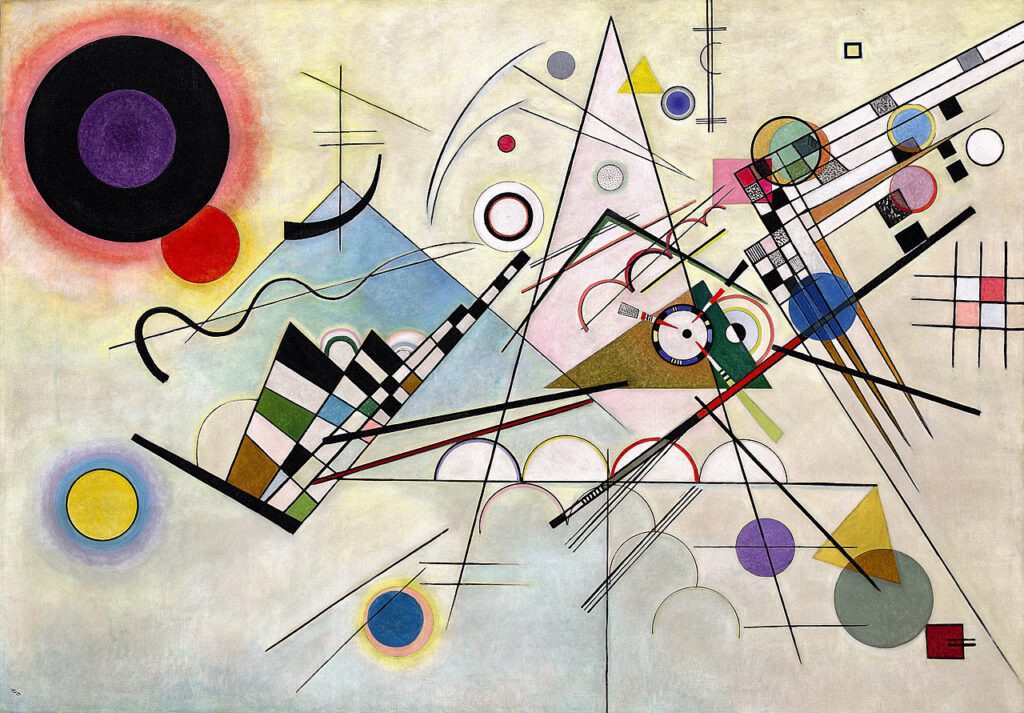
Kandinsky was a pioneer of abstract art and a key figure in both the Russian and European avant-garde. His works from the Soviet period, such as “Composition VIII” (1923), demonstrate his innovative use of color and form to express spiritual and emotional content. Kandinsky left the Soviet Union in 1921 but continued to influence Soviet art through his theoretical writings.
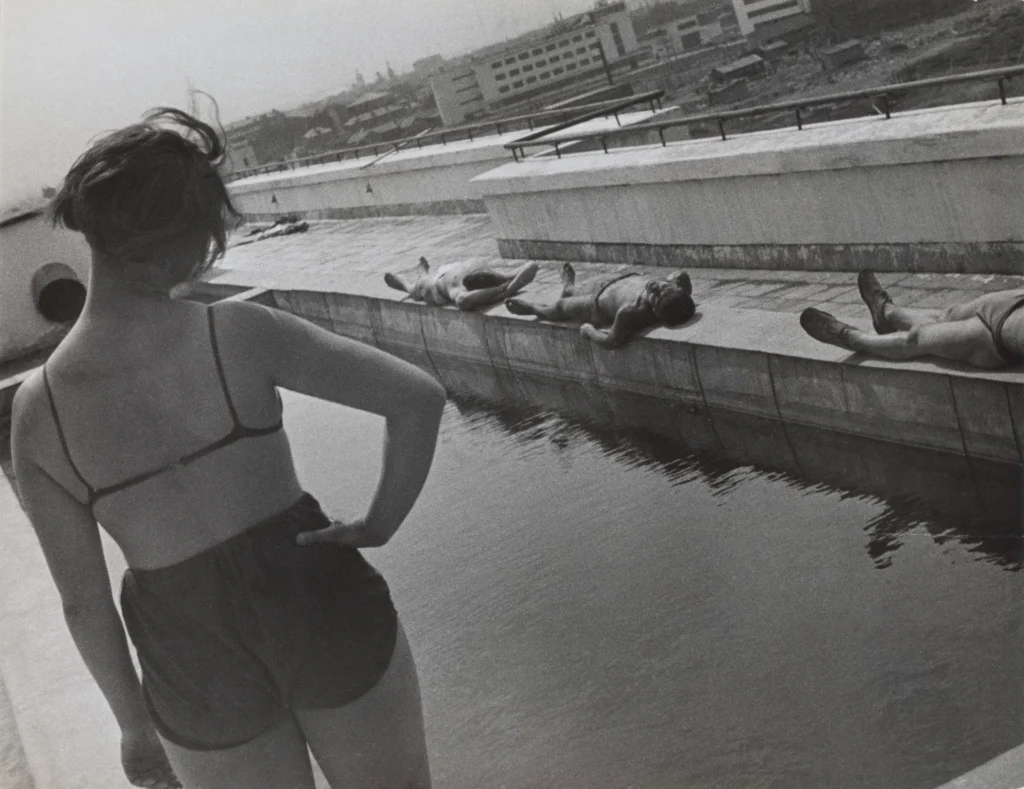
Alexander Rodchenko (1891-1956)
Rodchenko was a leading figure in Constructivism, applying abstract principles to photography, graphic design, and architecture. His innovative photographic techniques, including extreme angles and close-ups, revolutionized the medium and influenced generations of photographers. Despite his initial enthusiasm for the revolution, Rodchenko’s work was later criticized for its formalism.
Isaak Brodsky (1884-1939)
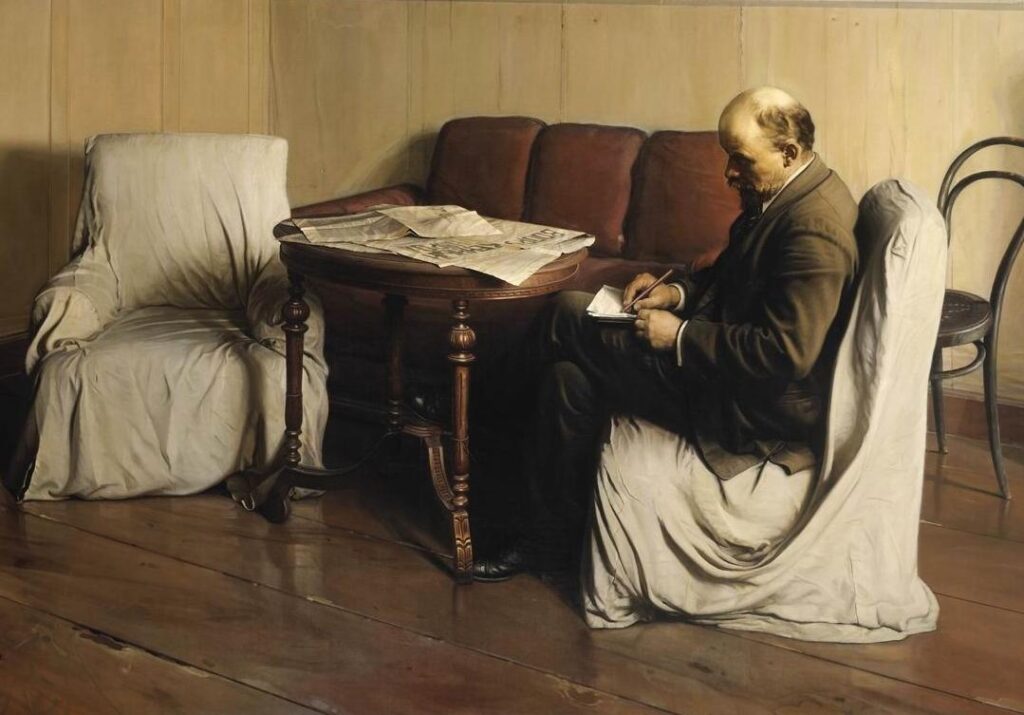
Brodsky was one of the most prominent Socialist Realist painters, known for his portraits of Soviet leaders. His 1930 painting “Lenin in Smolny” became an iconic image that was widely reproduced throughout the Soviet Union. Brodsky’s technical skill and ideological conformity made him a favorite of the Stalinist regime.
Aleksandr Deyneka (1899-1969)
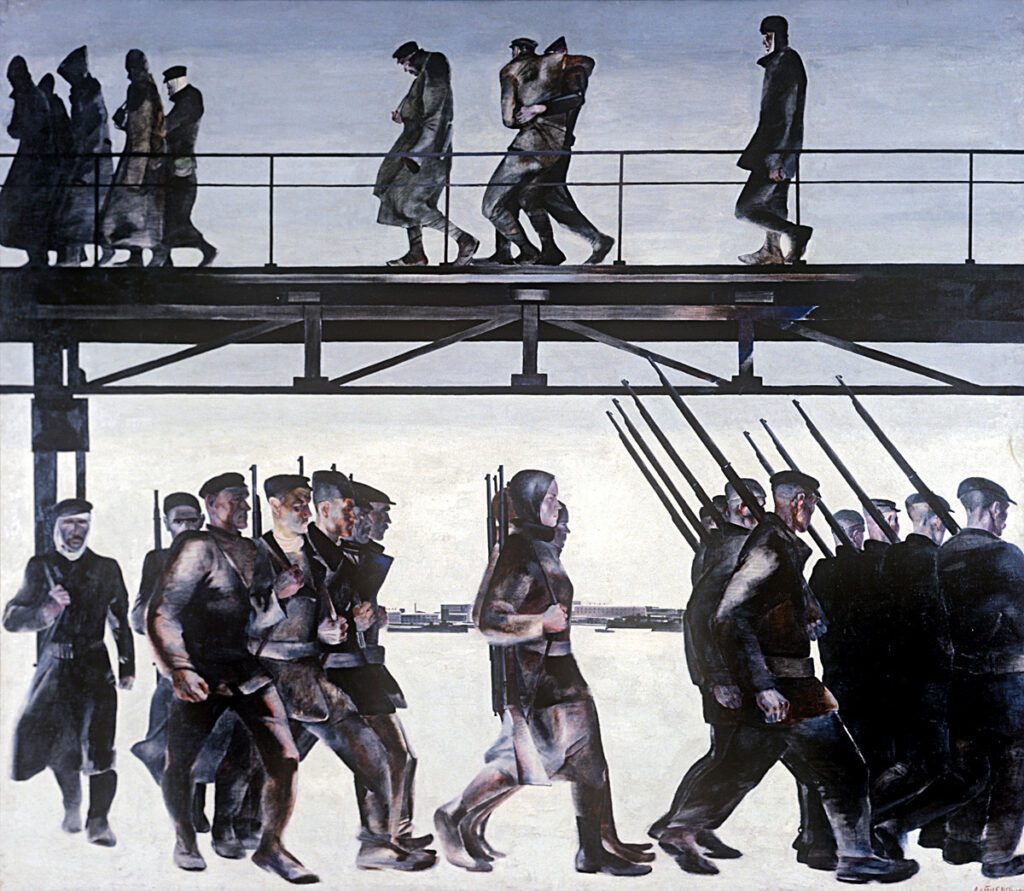
Deyneka was a leading figure in Socialist Realism who managed to incorporate modernist elements into his work. His paintings, such as “The Defense of Petrograd” (1928), combine heroic subject matter with bold compositions and simplified forms. Deyneka also created significant mosaics and murals for public buildings throughout the Soviet Union.
Notable Works of Soviet Art
Several works have come to define Soviet art across different periods:
“Black Square” by Kazimir Malevich (1915)
This seminal work of Suprematism consists of a black square on a white background, representing what Malevich called “the zero of form.” It marked a radical departure from traditional representation and remains one of the most influential abstract works of the 20th century. The painting is housed in the State Tretyakov Gallery in Moscow.
“Composition VIII” by Wassily Kandinsky (1923)
This vibrant abstract composition demonstrates Kandinsky’s innovative use of geometric forms and color relationships. The work reflects the artist’s belief in the spiritual power of abstract art and his interest in the connections between visual art, music, and emotion. It is now in the collection of the Guggenheim Museum in New York.
“Lenin in Smolny” by Isaak Brodsky (1930)
This iconic portrait depicts Vladimir Lenin in the Smolny Institute, the headquarters of the Bolshevik Revolution. Brodsky’s heroic portrayal established the visual template for representations of Soviet leaders that would dominate for decades. The painting is in the State Russian Museum in Saint Petersburg.
[IMAGE: isaak-brodsky-lenin-in-smolny.jpg | Alt text: Isaak Brodsky, Lenin in Smolny (1930), Oil on canvas, State Russian Museum, Saint Petersburg]
“The End of the City” by Alexander Rodchenko (1918)
This Constructivist work combines abstract forms with architectural elements, reflecting the revolutionary transformation of urban space. Rodchenko’s innovative use of perspective and geometric abstraction exemplifies the experimental spirit of the early Soviet avant-garde.
“The Defense of Petrograd” by Aleksandr Deyneka (1928)
This monumental painting depicts the heroic defense of Petrograd (now Saint Petersburg) during the Russian Civil War. Deyneka’s dynamic composition and simplified forms blend modernist aesthetics with Socialist Realist subject matter, creating a powerful visual narrative of collective struggle.
Historical Impact and Influence
Soviet art had a profound impact both within the Soviet Union and internationally:
Domestic Influence
Within the Soviet Union, art played a crucial role in shaping public consciousness and reinforcing political ideology. From monumental sculptures in public squares to illustrations in textbooks, Soviet visual culture permeated everyday life. This comprehensive artistic program helped to create a shared visual language that transcended the diverse ethnic and cultural traditions within the USSR.
International Influence
Despite political isolation, Soviet art influenced artistic movements worldwide. The avant-garde of the 1920s inspired European modernists, particularly in Germany and France. Later, Socialist Realism would become the official artistic style in communist countries across Eastern Europe, Asia, and Latin America. Even in the West, the scale and ambition of Soviet public art projects influenced approaches to muralism and community art.
Educational Legacy
The Soviet art education system produced generations of technically skilled artists and designers. Many of these artists emigrated during periods of political liberalization, bringing their training and aesthetic sensibilities to new contexts. The influence of Soviet art education can be seen in contemporary design, illustration, and animation practices worldwide.
Legacy and Modern Relevance
The legacy of Soviet art continues to resonate in contemporary culture:
Museum Collections
Major museums worldwide now recognize the significance of Soviet art, with dedicated collections at institutions like the State Tretyakov Gallery in Moscow, the State Russian Museum in Saint Petersburg, and the Museum of Modern Art in New York. These collections preserve and contextualize Soviet artistic achievements for new generations.
Contemporary Artists
Many contemporary artists engage with the visual language and themes of Soviet art, reinterpreting its aesthetic strategies for new contexts. Russian artists like Dmitry Vrubel and the Voina collective explicitly reference Soviet visual culture in their work, while international artists draw on its approaches to propaganda, public art, and political engagement.
Market Interest
In recent years, there has been growing market interest in Soviet art, with works by major artists achieving record prices at auction. This commercial recognition reflects both the aesthetic quality of Soviet art and its historical significance as a unique artistic phenomenon.
Common Misconceptions About Soviet Art
Several misconceptions about Soviet art persist:
Homogeneity
Many assume that Soviet art was monolithic, but in reality, it encompassed diverse styles and approaches. Even during the height of Socialist Realism, regional variations and individual artistic voices persisted. The underground art movements of the 1960s-1980s demonstrate the continued diversity of artistic practice within the Soviet Union.
Lack of Innovation
Contrary to popular belief, Soviet artists often demonstrated remarkable innovation, particularly in the early revolutionary period. The avant-garde movements of the 1920s produced groundbreaking approaches to abstraction, constructivism, and performance that influenced global artistic practice.
Political Naivete
While some Soviet artists were indeed politically committed, many navigated complex relationships with the state, sometimes using subtle resistance or coded meanings in their work. The relationship between artists and political power was often fraught with tension and compromise.
Isolation
Despite political barriers, Soviet artists maintained connections with international artistic developments. Many artists traveled abroad, and foreign art publications were available in specialized libraries. This cross-cultural exchange enriched Soviet artistic practice despite official restrictions.
Related Movements and Connections
Soviet art did not develop in isolation but was connected to numerous artistic movements:
Russian Avant-Garde
The Soviet avant-garde emerged from the broader Russian avant-garde of the early 20th century, which included movements like Neo-Primitivism and Rayonism. These earlier movements provided the foundation for the revolutionary experiments of the Soviet period.
International Modernism
Soviet avant-garde artists engaged with and influenced international modernist movements. The connections between Russian Constructivism and German Bauhaus were particularly strong, with artists and ideas moving between these contexts despite political barriers.
Socialist Realism in Other Countries
The Soviet model of Socialist Realism influenced artistic production in other socialist countries, including China, Cuba, and Eastern European nations. Each country adapted the style to local conditions, creating distinctive variations on the Soviet model.
Post-Soviet Art
The artistic practices that emerged following the collapse of the Soviet Union often engaged with the legacy of Soviet art, either through critique, appropriation, or reinterpretation. This ongoing dialogue continues to shape contemporary art in Russia and former Soviet republics.
Essential Points About Soviet Art
- Soviet art encompasses the artistic movements and works created within the Soviet Union from 1917 to 1991
- The avant-garde movements of the early Soviet period, including Suprematism and Constructivism, produced innovative approaches to abstraction and form
- Socialist Realism became the official artistic style in the 1930s, emphasizing realistic depictions of Soviet life that served political goals
- Major Soviet artists include Kazimir Malevich, Wassily Kandinsky, Alexander Rodchenko, Isaak Brodsky, and Aleksandr Deyneka
- Soviet art was deeply influenced by political ideology but also demonstrated remarkable technical innovation and aesthetic achievement
- Despite restrictions, Soviet artists maintained connections with international artistic developments
- The legacy of Soviet art continues to influence contemporary artistic practice, particularly in approaches to public art and political engagement
- Major collections of Soviet art can be found in the State Tretyakov Gallery in Moscow and the State Russian Museum in Saint Petersburg
Frequently Asked Questions
- Q – What is the main purpose of Soviet art?
- A – The main purpose of Soviet art evolved over time. Initially, it aimed to express revolutionary ideals and create a new visual language for a socialist society. Later, under Socialist Realism, it served to promote communist ideology, glorify workers and leaders, and present an optimistic vision of Soviet life.
- Q – How did the Russian Revolution change portrait painting?
- A – The Russian Revolution transformed portrait painting by shifting focus from aristocratic subjects to workers, peasants, and revolutionary leaders. Early Soviet portraits experimented with abstract approaches, while later Socialist Realist portraits emphasized heroic qualities and collective identity rather than individual uniqueness.
- Q – What do specific colors or objects symbolize in Soviet art?
- A – In Soviet art, red symbolized revolution, communism, and sacrifice. Industrial objects like gears and factories represented progress, while agricultural tools and fields connected to peasant life. The hammer and sickle became iconic symbols uniting industrial and agricultural workers.
- Q – Why is Kazimir Malevich so important in Russian art?
- A – Kazimir Malevich is important for founding Suprematism, an abstract movement that radically rejected representation in favor of pure geometric forms. His “Black Square” (1915) marked a turning point in 20th-century art and influenced generations of artists despite later suppression by Soviet authorities.
- Q – Where can I see famous Soviet artworks today?
- A – Famous Soviet artworks can be seen in the State Tretyakov Gallery in Moscow, which has an extensive collection of Russian and Soviet art, and the State Russian Museum in Saint Petersburg. International museums like MoMA in New York and Tate Modern in London also hold significant Soviet works.