Quick Answer
Gzhel and Khokhloma are two of Russia’s best-known folk decorative traditions. Gzhel is blue-and-white ceramics painted with cobalt, made in the village of Gzhel and its surrounding area, with a blue-and-white style commonly dated to around 1802. Khokhloma is painted wood, with red, black, and gold flowers, berries, and leaves, which emerged in the Nizhny Novgorod region in the second half of the 17th century. Both began as rural trades, were reshaped by Soviet-era workshops, and remain living crafts today. Both are still painted by hand.
What Are Gzhel and Khokhloma?
Gzhel is a Russian style of blue-and-white ceramics, named for the village of Gzhel and its surroundings, where the blue-and-white style has been produced since a date commonly placed around 1802. Khokhloma is a style of painting on wooden household items. It takes its name from a village in Koverninsky District, Nizhny Novgorod Oblast, where it first appeared in the second half of the 17th century.
One tradition works in clay and a single cold pigment. The other works in turned wood and a warm palette of red, black, and gold. Both began as peasant crafts and later entered art schools, museums, and souvenir shops. Art historians file them under decorative art: objects made for daily use, whose painting carries as much weight as their function.
Two Materials, Two Regions
Geography explains much of the difference. Gzhel lies southeast of Moscow, in a district of clay deposits where villages supplied potters for generations. Khokhloma belongs to the Volga region, forest country where timber was plentiful and woodworking was an ordinary local trade. Carvers there decorated the gables and gates of peasant cottages, and the same skills fed into spoons, bowls, and furniture.
A potter and a wood turner faced opposite problems. The potter needed a pigment that survived the kiln. The wood turner needed a surface that could make plain pale wood look costly.
From Kalita’s Will to Cobalt Blue: Gzhel’s Past
Pottery near Gzhel is far older than the 1802 date attached to the blue-and-white style. A 1339 will of Prince Ivan Kalita is often cited as the earliest written mention of the village, though specialists treat that early evidence with care. For centuries local potters made practical earthenware, then majolica painted in several colours.
Many accounts describe the palette narrowing gradually to cobalt blue during the 19th century, as porcelain and faience works took over from household kilns. Cobalt holds its colour at high kiln temperatures, which helps explain why ceramic painters from China to the Netherlands used it. Visitors often compare Gzhel to Delft, but the two grew from separate workshop cultures.
Painting in One Stroke: How Gzhel Is Made
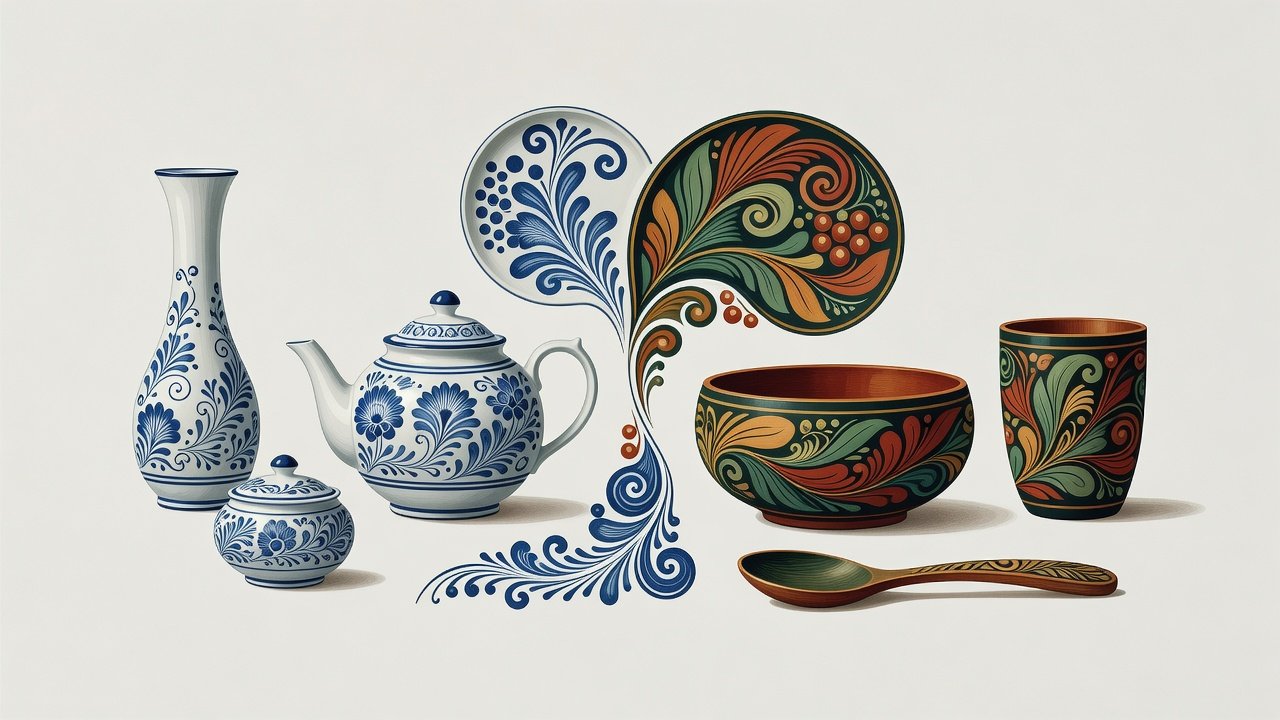
Gzhel painters use a single pigment, cobalt oxide, and build tone through pressure and the amount of pigment the brush carries. One stroke can run from deep blue at the base of a petal to pale at the tip, so the flower looks modelled without an outline. Fine linework then adds stamens, veins, and borders.
The piece is glazed and fired. With no second colour to lean on, control of dilution and pressure is the whole skill. The same method decorates tea sets and vases, and sculpture too, such as animals and figures.
Myth vs. Fact: Does Gzhel blue look blue on the brush?
Myth: Gzhel painters see blue while they work. Fact: cobalt oxide often goes on looking dull grey or black. The blue develops only after glazing and firing, so painters must predict the final shade from how heavily they load the brush.
Forest Workshops and Old Believer Legends: Khokhloma’s Origins
The village of Khokhloma, in the Volga region, gives the style its name, and the style first appeared there in the second half of the 17th century. Popular stories credit an icon painter who fled Moscow, or Old Believer hermits living in the forests beyond the Volga. Scholars disagree, and no surviving document settles the question, so treat these as folklore.
Where did the name Khokhloma come from?
Accounts often explain that the village worked as a market where painted wares were gathered and sold, while much of the painting happened in surrounding villages. If so, the name records a trading point, not a single workshop. That explanation is widely repeated but not firmly proven.
How Does Plain Wood Turn Golden?
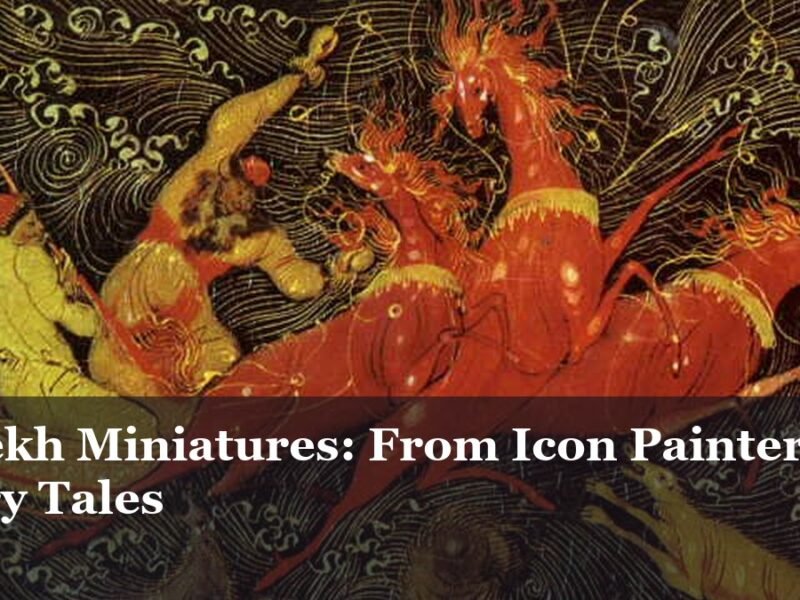
Khokhloma is made in stages. A turned or carved blank, commonly of linden or birch, is coated with liquid clay to seal the grain. Linseed oil goes on repeatedly, then a metal powder (tin in traditional work, aluminum in many modern workshops) is rubbed in, leaving a silver surface.
Painters add red and black oil paint, sometimes with green or other accents. The piece is lacquered with oil varnish and baked in an oven, where the varnish yellows and the silver reads as gold. No gold is needed, which kept handsome tableware within reach of ordinary buyers.
Reading the Ornament: Flowers, Berries, Birds
Khokhloma is defined by curving linear features: small flowers, berries, grasses, and leaf motifs, with the Firebird of Russian fairy tales a favourite main subject. Painters work in two broad manners. In one, red and black motifs sit on the metallic gold ground. In the other, the ground is red or black and the gold forms the design. Curling leaf shapes known as kudrina and thin grass strokes fill the gaps between berries.
Roses, bellflowers, sprigs, and birds make up much of Gzhel’s vocabulary, with village scenes now and then, all in cobalt tones. What the two share is repetition with variation. The same few forms recur, but two brush paths rarely match.
Who Painted These? Makers, Workshops, and Semyonov
Both crafts belonged to families and workshops where tasks were divided among turners, primers, and painters. Semyonov, a town in Nizhny Novgorod Oblast with 24,473 residents at the 2010 census, remains a major centre for Khokhloma painting and for matryoshka dolls. One town, two traditions.
Is folk painting really anonymous?
Peasant makers seldom signed their work, yet identifiable people shaped what they made: workshop owners, art school teachers, and city designers who chose which patterns to repeat. Anonymity at the bench coexisted with named direction, a pattern that becomes clear at Abramtsevo.
Abramtsevo: Artists Go Looking for the Folk
Abramtsevo, a former estate north of Moscow near Khotkovo, became an artists’ colony in the 19th century. The industrialist Savva Mamontov acquired the estate around 1870, and painters gathered there. Vasily Polenov and Viktor Vasnetsov designed the Church of the Saviour Not Made by Hands on the grounds in 1881 and 1882, drawing on medieval Novgorod architecture.
Yelena Polenova, Vasily’s sister, took a practical interest in village work. In the 1880s she helped run the colony’s carpentry workshop and gathered peasant carving and embroidery as models for new designs. Her method was to copy, adapt, and refine, and it set a template for how city artists would treat folk crafts for decades.
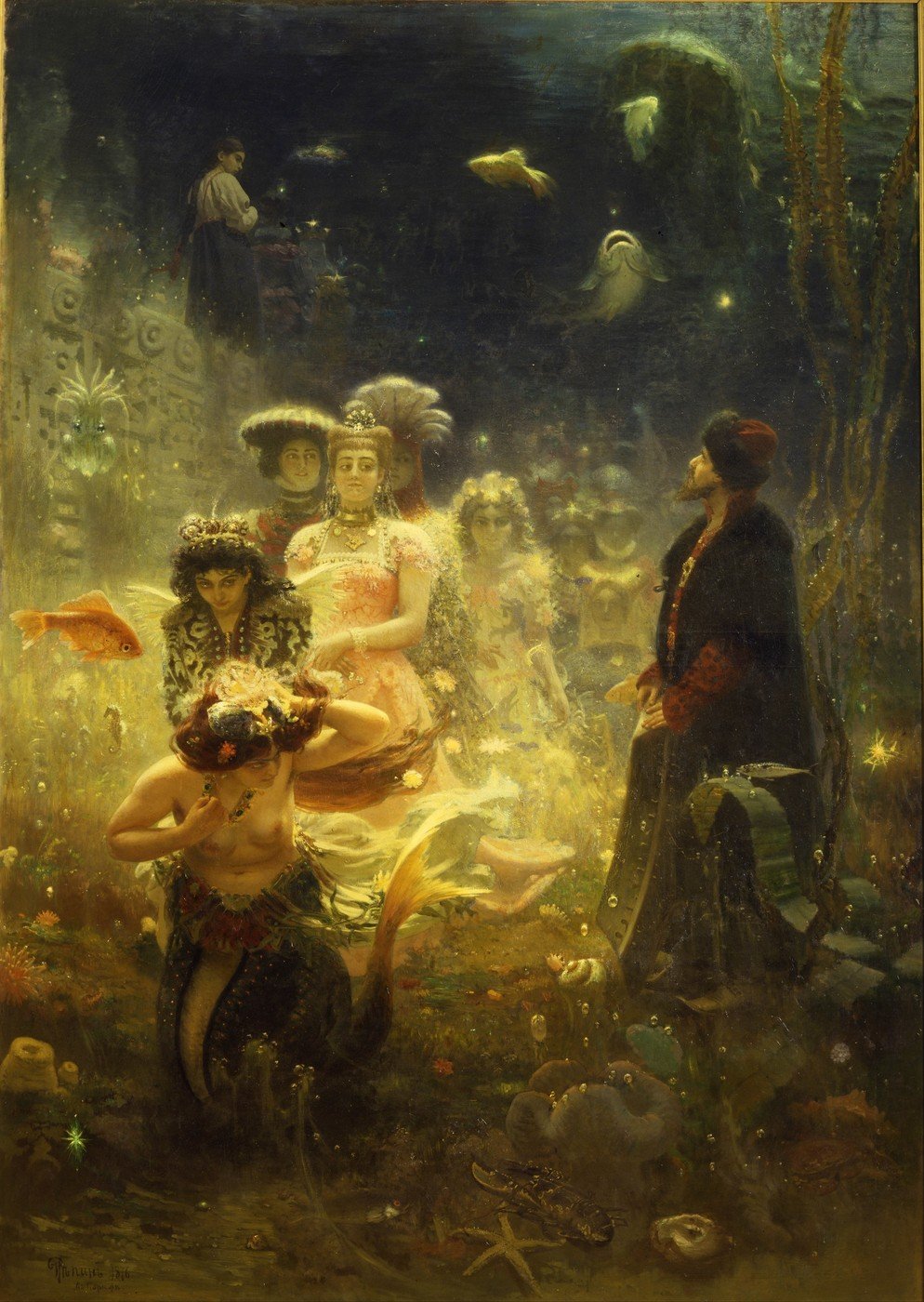
Malyutin and the Matryoshka
Sergey Malyutin (1859 to 1937) was a painter, illustrator, scenic designer, and architect, initially associated with the Arts and Crafts movement. Outside Russia he is credited with designing what is widely regarded as the first matryoshka set, reportedly carved by Vasily Zvyozdochkin around 1890. The set is usually linked to a Moscow workshop tied to the Mamontov family, and the original is said to be kept at the toy museum in Sergiev Posad.
In the matryoshka, the Abramtsevo method is plainly at work. An artist took a peasant skill, turned wood, and gave it a fresh form that factories and village painters could repeat in countless variations.
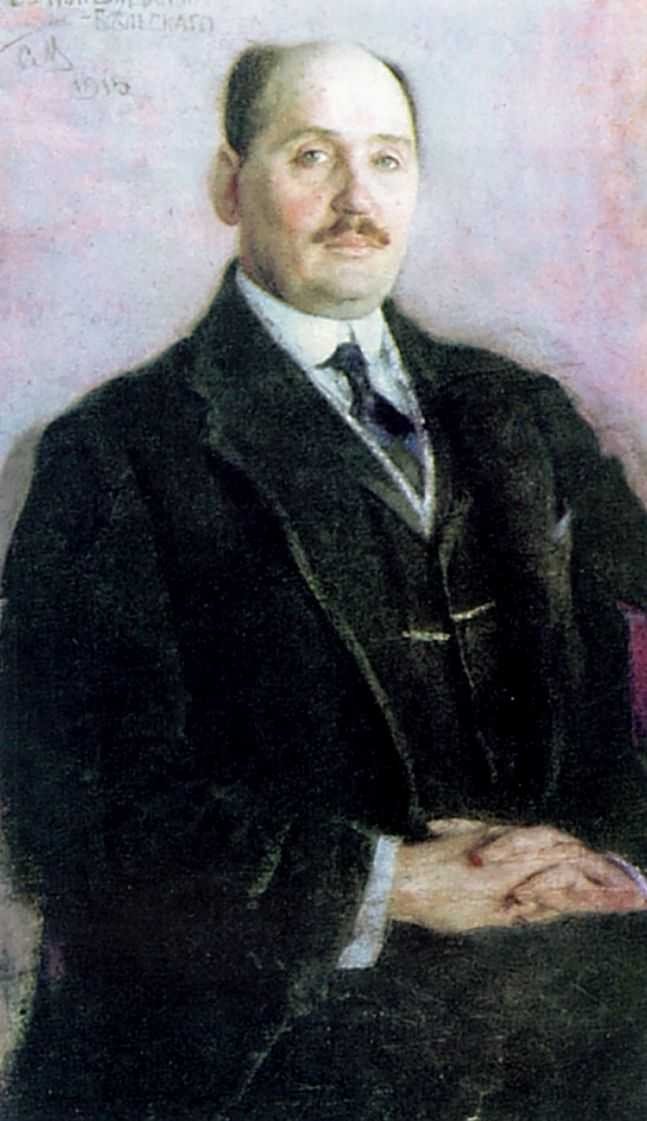
Soviet Workshops and Standard Patterns
In the Soviet decades, scattered household crafts were organized into cooperatives and state enterprises. Painters were trained in schools, patterns were approved and replicated, and finished goods reached department stores and export markets. For Gzhel, that meant larger factories turning out porcelain in a codified cobalt style. For Khokhloma, towns such as Semyonov became production centres with large painting workshops.
Some scholars argue that standardization narrowed local variation. Others point to steady income, skills training, and the survival of crafts that might have vanished. Both views can be right for different workshops.
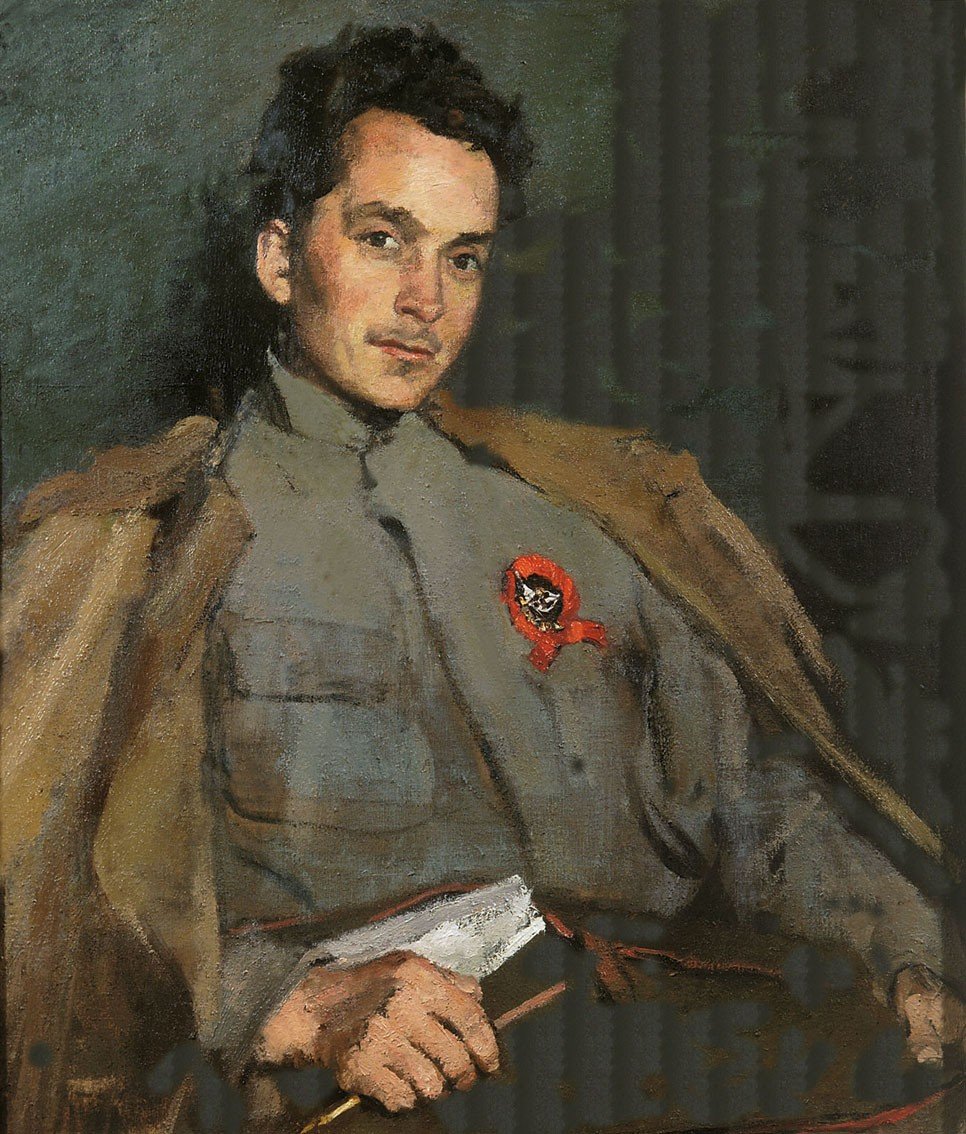
Gorodets and Other Neighbours
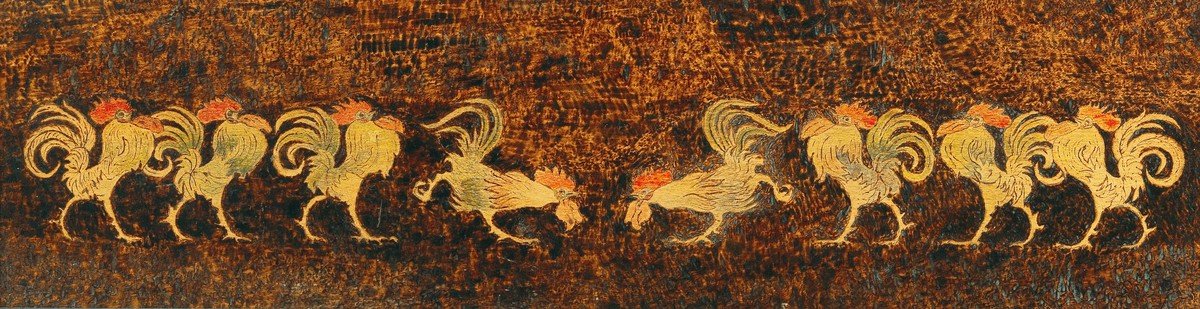
Gorodets painting is a Russian handicraft and folk painting technique usually described as naive art. Its painters favour roosters, horses, and flowers, and the tradition historically decorated household wood items such as the bottoms of spinning-wheel distaffs. Roosters recur in Russian folk imagery, and a late painting by Sergey Malyutin, Parade of Cockerels (1937), shows how fine artists absorbed the motif.
Other regional schools, such as Zhostovo tray painting, show how many places turned everyday objects into painted surfaces. They are neighbours, not copies: each tied a pigment, a ground, and a set of motifs to a local workshop culture.
Where to See Them
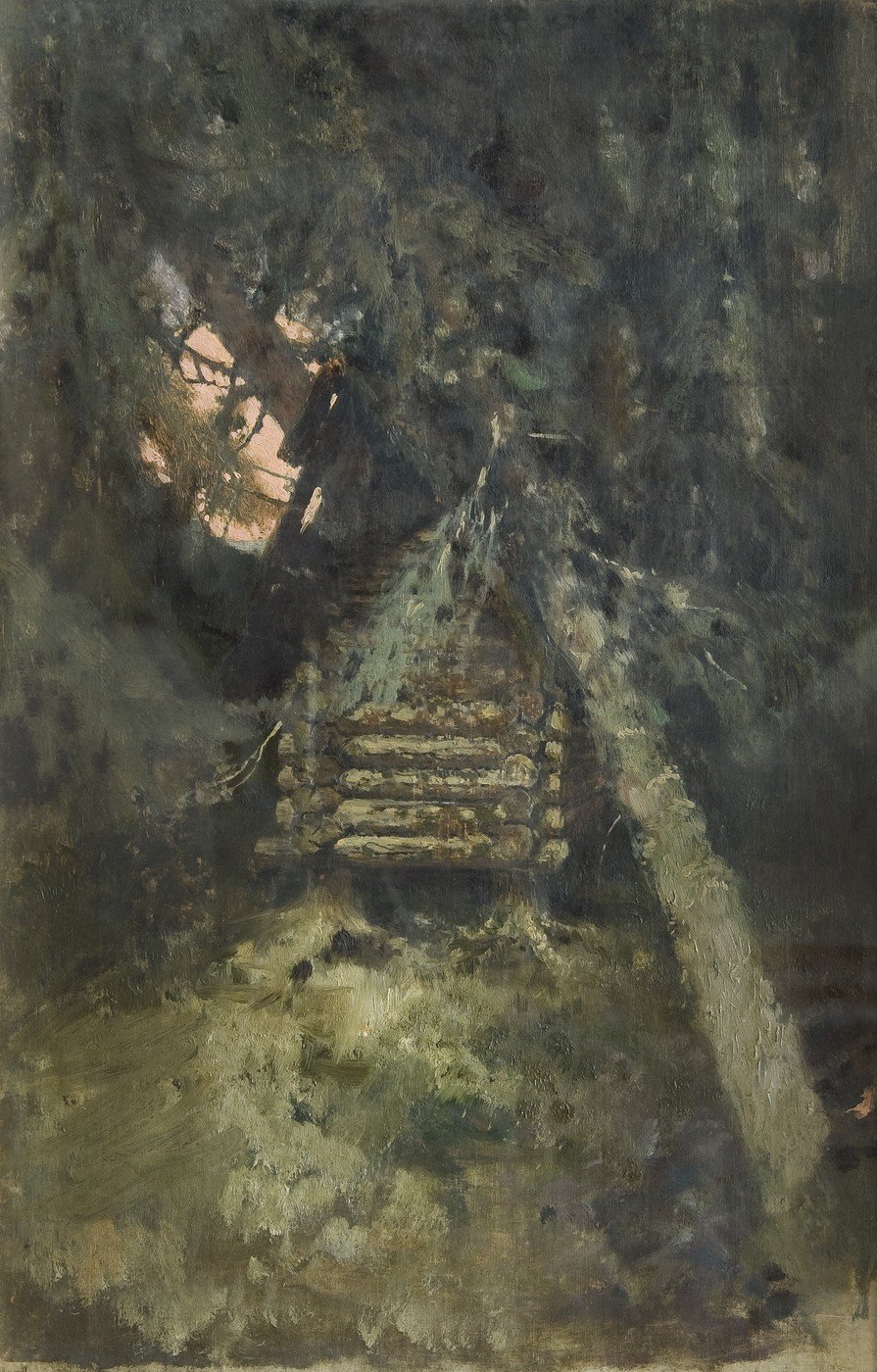
Start with the Abramtsevo Museum-reserve, where the colony’s buildings, including the fairy-tale Hut on Hen’s Legs designed by Viktor Vasnetsov, show how artists framed folk design. The toy museum in Sergiev Posad holds matryoshka history. Moscow’s museum of decorative and folk art gives wider context for both crafts.
In Semyonov and the Gzhel district, many workshops welcome visitors and sell directly, so you can watch the brush at work. Museum labels help you judge age and workshop, which shop shelves rarely do.
Legacy: Craft, Souvenir, or Art?
Today both traditions live in several registers at once: museum objects, workshop products, souvenir goods, and raw material for designers who borrow cobalt blue or gold-and-red foliage for new objects. The same pattern can appear on a hand-painted teapot and a mass-produced mug.
Do they count as fine art?
Museums collect them as decorative art, and their history includes painters such as Polenova and Malyutin, which blurs the old line between craft and fine art. The better question is what the maker controlled. Look for decisions in the brushwork, because that is where a tradition keeps its individuality.
Essential Points
- Constraint shaped style: Gzhel gets its range from one pigment, Khokhloma from a metal ground under varnish, so each look is a solution to a material problem.
- Neither craft is timeless. Dates such as 1802 for Gzhel and 1890 for the first matryoshka mark moments when makers or designers reset the pattern.
- The village names point to places, but the Khokhloma name may record a market rather than a single workshop.
- Origin stories, such as the fugitive icon painter, are folklore until documents support them, and scholars disagree.
- Painters at Abramtsevo, not peasants, drove the late 19th century revival, which is why the history of folk art includes named designers.
- One town can hold several traditions: Semyonov is a centre for both Khokhloma and matryoshka production.
- The Soviet period brought scale and training but also standard patterns, a trade-off that still shapes what souvenir shelves look like.
- Museums that treat these objects as decorative art give the best context for reading brushwork, which is the clearest sign of a hand-painted piece.
Frequently Asked Questions
- How do you pronounce Gzhel and Khokhloma?
- Gzhel sounds like ‘gzhel’, with the zh as in ‘measure’ and a soft final l. Khokhloma is roughly ‘khukh-luh-MAH’, stressed on the final syllable, with kh like the ch in the Scottish word ‘loch’. Russian IPA transcriptions give [ɡʐɛlʲ] and [xəxɫɐˈma].
- Why did Russian artists start collecting peasant crafts in the 1800s?
- Abramtsevo became a centre of the Slavophile movement as well as an artists’ colony, so interest in peasant objects was tied to ideas about a distinct Russian culture. Painters saw village carving and painting as a living alternative to imported academic taste, and they copied, collected, and redesigned it for workshops.
- Can I wash Khokhloma tableware in a dishwasher?
- Most makers advise washing by hand with mild soap. The painted surface rests on baked oil varnish over wood, and prolonged soaking, strong detergent, or dishwasher heat can dull the finish and loosen the wood. Check any piece sold for food use, since modern workshops differ in their varnishes and safety claims.
- Who was Yelena Polenova?
- Yelena Dmitrievna Polenova (1850 to 1898) was a Russian painter and graphic artist working in the Art Nouveau style. She was among the first illustrators of children’s books in the Russian Empire, and her brother was the landscape painter Vasily Polenov. At Abramtsevo she studied peasant crafts as sources for new design.
- How can I tell a hand-painted piece from a printed one?
- Look closely at the brushwork. Hand-painted Gzhel shows strokes that thicken and thin within a single petal, and Khokhloma often shows slightly uneven curves and raised paint edges under the varnish. Printed decals look uniformly flat, with identical motifs repeating. A workshop stamp on the base helps, though it proves little alone.

This guide was written and reviewed by the rus-art.com editorial team, specializing in Russian art history. We cross-check dates, attributions, and museum holdings against museum and academic sources.