Save to calendar
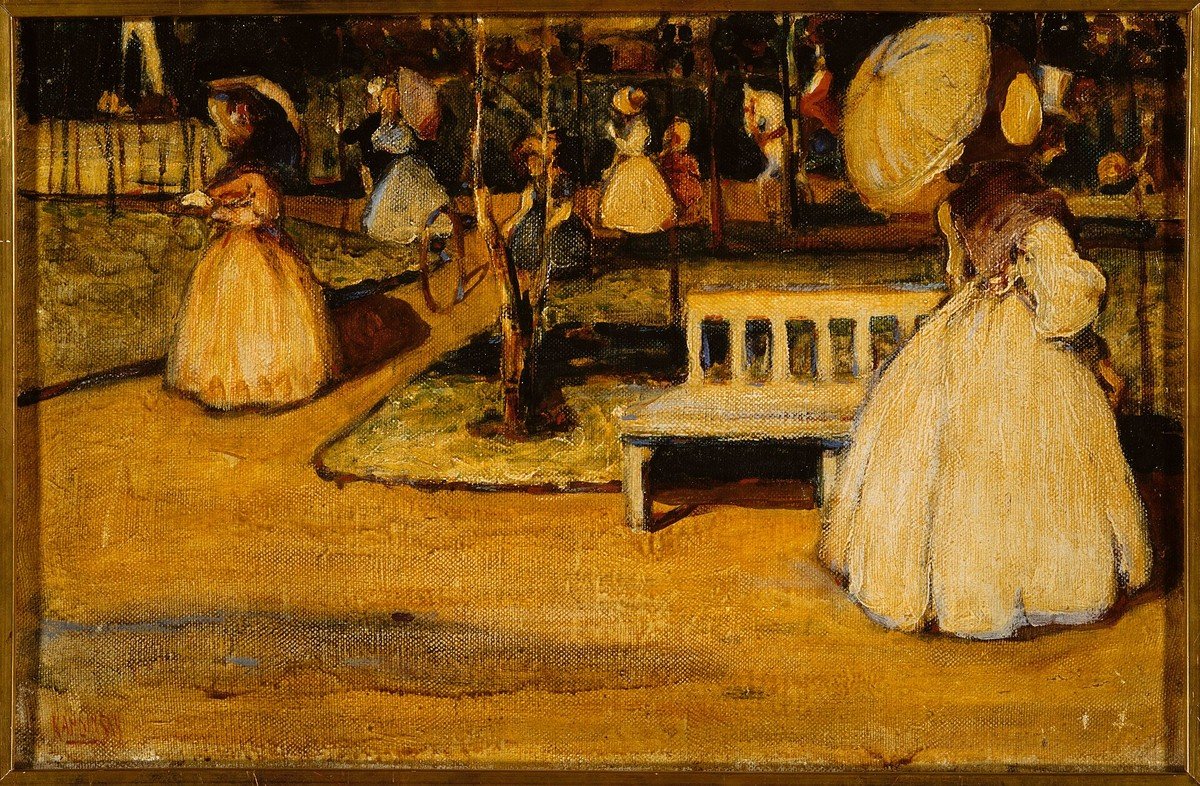
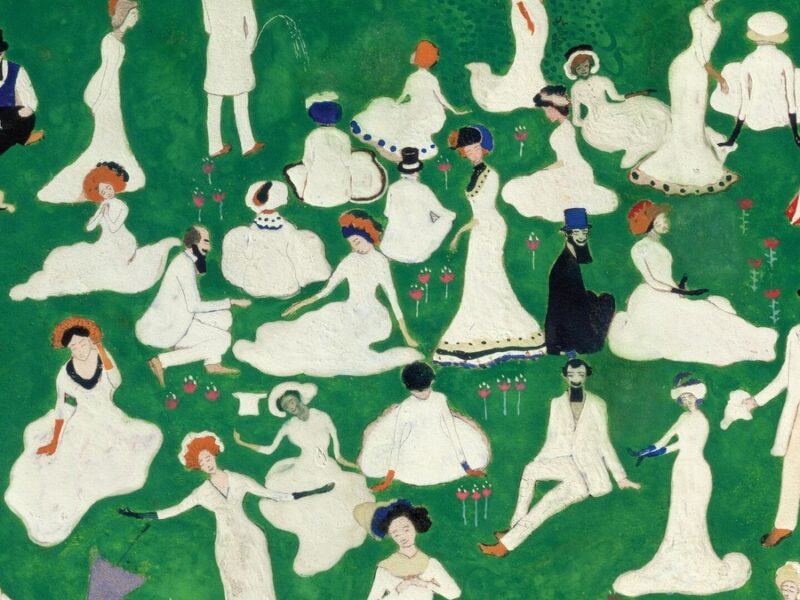
Point and Line follows one idea through a century and more of Russian art: the geometric form as a way of seeing. More than 150 works fill the galleries, among them painting, graphics, sculpture, photography, installation and video art. The hang begins with the Russian Cezannists and the Cubo-Futurists, who broke the visible world into planes and volumes, and it arrives at artists working today.
Two names anchor the story. Kazimir Malevich was born in Kiev in 1879 and became a leading figure of the Russian avant-garde. In 1915 he introduced Suprematism, a system of pure geometric abstraction on monochromatic grounds, and his Black Square, first shown that year at the Last Futurist Exhibition 0,10 in Petrograd, marked a decisive break with representational painting. Before that he had worked through Impressionism, Symbolism, Fauvism and Cubism, and he exhibited alongside Mikhail Larionov and Natalia Goncharova.
Wassily Kandinsky came to painting late, starting his studies at thirty. Born in Moscow in 1866, he settled in Munich in 1896, returned to Moscow in 1914, and went back to Germany in 1920, where he taught at the Bauhaus from 1922 until the Nazis closed it in 1933. He is generally credited as one of the pioneers of abstraction in Western art. The exhibition presents his experiments as a counterpoint to Malevich: two routes to the same break with the object, one rooted in the spiritual, the other in the geometric system.
The survey does not stop with the first avant-garde. It follows the line into the so-called second avant-garde and on to contemporary artists, who still work with the square, the circle and the straight edge. Seen together, the pieces show how a handful of elementary shapes kept returning in Russian art, each generation giving them a different task.