Russian religious icons are sacred images painted on wooden panels, central to Orthodox Christian worship and home prayer for over a thousand years. Governed by strict theological rules, they depict Christ, the Virgin Mary, and saints through symbolic color, gold leaf, and reverse perspective, serving as windows to the divine rather than mere illustrations. Russian iconography emerged after Kievan Rus' adopted Orthodox Christianity from the Byzantine Empire in 988 AD, growing from Byzantine models into a tradition with its own visual language, techniques, and spiritual expression central to Russian cultural identity. This article traces those origins from Byzantine beginnings through the development of regional schools and styles, examining the theological foundations, technical processes, and characteristics that define this revered art form.
The Foundations of Christian Iconography
The tradition of Christian iconography predates Russia's adoption of Orthodox Christianity by nearly a millennium. Early Christians, even during periods of persecution, created visual representations of their faith in places like the Roman catacombs, laying the groundwork for what would become a sophisticated theological and artistic system.
Early Christian Visual Traditions
The earliest Christian art emerged within a faith seeking to express its central mysteries visually. Initially cautious about imagery, given Jewish prohibitions against graven images and the surrounding context of pagan idol worship, Christian communities gradually developed appropriate ways to visualize their beliefs. The oldest surviving examples date to the 3rd century, found in Roman catacombs, depicting biblical scenes and symbols recognizable to the faithful. These images served both pedagogical and devotional purposes, allowing people who could not read to engage with sacred stories and truths.
The First Icons and St. Luke's Legacy
According to Orthodox tradition, icon painting traces back to the apostolic age. The first icon is attributed to St. Luke the Evangelist, who painted the image of the Virgin Mary while she was still alive. This tradition established a core principle in Orthodox icon theology: icons show real people and events, not artistic invention. St. Luke's attributed creation provided legitimacy to the practice and established a direct connection to the apostolic era.
The Mandylion: "Savior Not Made by Hands"
Perhaps the most significant early icon in Orthodox tradition is the Mandylion, also known as "The Savior Not Made by Hands." According to tradition, Christ created this image by pressing his face onto a cloth sent to heal King Abgar of Edessa. This miraculous icon established the theological justification for all subsequent icon creation: if Christ himself created an image of his face, human artists could also create sacred images. This icon type became one of the most revered in Russian iconography, embodying the connection between icons and the doctrine of the Incarnation. The belief that Christ, by becoming human, made the invisible God visible provides the theological foundation for the creation and veneration of icons.
Byzantine Influences on Russian Icon Painting
Russian iconography has its direct historical roots in Byzantine art. When Prince Vladimir of Kiev adopted Orthodox Christianity in 988 AD, the artistic traditions of Byzantium arrived with the new faith, establishing a foundation that would shape Russian sacred art for centuries.
The Baptism of Kievan Rus' and Orthodox Christianity (988 AD)
The conversion of Kievan Rus' to Orthodox Christianity in 988 AD under Prince Vladimir marked a pivotal moment in Russian cultural and spiritual history. According to the Primary Chronicle, Vladimir sent emissaries to various religious centers to observe their worship. The emissaries were particularly struck by the beauty of the Divine Liturgy at Hagia Sophia in Constantinople, reporting that "we knew not whether we were in heaven or on earth." This encounter with Byzantine worship, its icons, mosaics, and ceremonial splendor, created an enduring link between visual beauty and spiritual truth in Russian Orthodox practice. The adoption of Christianity brought not only new religious practices but an entire visual culture that transformed Russian aesthetic sensibilities.
Transfer of Byzantine Artistic Standards to Russia
Following Russia's conversion, Byzantine artists and craftsmen were invited to construct and decorate new churches in Kiev and other cities. They brought technical skills, aesthetic principles, and iconographic programs refined over centuries in Constantinople. They introduced the strict canons governing icon painting: the specific ways to depict Christ, the Virgin Mary, and saints; the use of reverse perspective; the symbolic use of color; and the spiritual meaning of gestures and attributes. These Byzantine standards provided the initial template for Russian icon painters.
Early Russian Icons: Byzantine Monks in Kiev
The first Russian icons were essentially Byzantine works created by Greek monks working in Kiev, closely following Byzantine models in style, technique, and iconography. The Cathedral of St. Sophia in Kiev, constructed in the 11th century, featured mosaics and frescoes executed by Byzantine masters, providing examples for local artists to study and emulate. Gradually, Russian apprentices learned from these masters, beginning the slow process of transforming the imported tradition into something distinctly Russian. This foundation phase lasted roughly from the late 10th through the 12th century.
The Emergence of Distinct Russian Iconographic Styles
By the 12th century, Russian icon painters began developing styles distinct from their Byzantine teachers. This emergence of uniquely Russian approaches coincided with the political and cultural decentralization of Rus' following the Mongol invasions, allowing regional centers to develop their own artistic idioms.

Novgorod School of the 12th Century
The city of Novgorod, having escaped the worst devastation of the Mongol invasions, became a crucial center of a distinctive Russian icon painting tradition. Novgorod icons are characterized by bold compositions, vibrant colors, simplified forms, and emotional expressiveness. Unlike the more somber Byzantine style, Novgorod icons often featured bright reds, greens, and yellows, creating vivid visual impact. The figures tend to be more frontal and less elongated than in Byzantine icons, with a folk-art quality that appealed to a broad audience. The famous icon of "St. George and the Dragon" from Novgorod exemplifies this style with its bright colors, dynamic composition, and accessibility.
Distinguishing Features of Russian Icons vs. Byzantine Icons
As Russian iconography evolved, it developed characteristics that distinguished it from its Byzantine origins. Russian icons often displayed greater emotional warmth compared to the more austere and transcendent quality of Byzantine examples. Russian painters frequently depicted saints with rounded, kindly faces rather than the stern and ascetic visages common in Byzantine art. Russian icons also incorporated more narrative elements and everyday details, making sacred stories more relatable to common worshippers.
Color Palette and Techniques
Russian iconographers developed a distinctive color palette that set their work apart from Byzantine precedents. They incorporated bright greens, pale yellows, and vivid reds less common in Byzantine icons, and used black lines to outline figures, creating a more graphic quality. Russian painters also developed specific techniques for applying paint in multiple thin layers to produce luminous effects, particularly in faces. Painting a face began with a dark olive-green base called sankir, then built up through progressively lighter tones to produce a distinctive glow understood as the outward sign of inner spiritual illumination.
Symbolic Elements Unique to Russian Icons
While maintaining the core symbolic vocabulary of Byzantine iconography, Russian icon painters introduced elements reflecting local cultural and spiritual emphases. Architectural backgrounds often featured distinctively Russian church forms rather than Byzantine structures. Russian iconographers developed unique ways of depicting certain saints of particular importance in Russian spirituality, such as St. Nicholas. The Russian tradition also created new icon types absent from Byzantine art, including complex "Church Festivals" icons showing multiple feast days in a single composition, and the distinctively Russian icons of "Sophia, Divine Wisdom" that had no direct Byzantine equivalent.
The Technical Process of Icon Creation
The creation of Russian icons followed rigorous technical processes passed down through generations of master iconographers to their apprentices, combining practical craftsmanship with spiritual discipline.

Materials and Preparation Methods
Russian icons were typically painted on wooden panels, usually linden or pine. Preparing the panel required great care: the wood was first seasoned to prevent warping and cracking. A shallow recess called the kovcheg was carved into the center of the panel, leaving a raised border known as the luzga. This recessed area contained the main image, creating a symbolic separation between the sacred image and the profane world. The wood was then covered with linen cloth, followed by multiple layers of gesso made from chalk or alabaster mixed with animal glue. This gesso ground, called levkas, was carefully polished to create a smooth, luminous surface ready to receive paint. The materials carried symbolic significance: the wood represented the Tree of Life, while the gesso symbolized the purity required to receive divine wisdom.
The Layering Technique
Icon painting involved a systematic application of paint in layers, moving from dark to light. Russian icons traditionally began with a dark brown background layer. This dark foundation, sometimes called "darkness of non-being," symbolized the primordial chaos before creation. The iconographer then gradually built up lighter layers, symbolizing the emergence of divine light from darkness. Gold leaf was applied to backgrounds and halos, representing divine, uncreated light. The final highlights, in the lightest colors, represented the pinnacle of spiritual illumination. This technique of moving from darkness to light mirrored the spiritual journey from sin to salvation, embedding theological meaning into the very process of painting.
Guidebooks and Pattern Books (Podlinniki)
To maintain consistency and theological accuracy, Russian icon painters relied on pattern books known as podlinniki. Widely disseminated from the second half of the 16th century, these guidebooks provided detailed instructions on depicting each saint and biblical scene, specifying physical features, clothing, attributes, and gestures for hundreds of sacred figures. Some podlinniki contained drawings, known as litsevoy podlinnik, while others provided verbal descriptions, called tolkoviy podlinnik. These pattern books ensured that icons remained recognizable and theologically correct regardless of where or when they were painted. While these guides might seem to restrict creativity, Russian iconographers found ways to express individual and regional styles while working within canonical frameworks.
The Theological Significance of Russian Icons
Beyond their artistic value, Russian icons embody a profound theological vision that distinguishes them from other forms of religious art. They are considered not merely representations but present realities that make the heavenly accessible to believers.
Icons as Windows to the Divine
At the core of Orthodox icon theology is the concept that icons serve as windows to the heavenly. Unlike Renaissance religious art, which aimed for naturalistic representation of the physical world, Russian icons sought to transcend physical reality and connect the viewer with spiritual truth. This approach resulted in the distinctive stylization of icons, where figures do not adhere to natural proportions or perspectives. The use of reverse perspective, where lines expand rather than converge as they recede from the viewer, places the vanishing point in front of the icon rather than within it, symbolically including the viewer in the sacred space. This deliberate departure from naturalism signals that icons show a transfigured reality, not the physical world as ordinary perception knows it.
Symbolism in Russian Iconography
Russian icons employ a rich symbolic language to convey theological truths. Each element within an icon, from the positioning of figures to the objects they hold, carries specific meaning. The hierarchical arrangement of figures reflects their spiritual significance rather than natural spatial relationships. Christ typically occupies the center or upper portion of the composition, signifying his supreme position. Larger figures indicate greater spiritual importance rather than physical proximity. Stylized mountains, buildings, and landscapes represent spiritual realities rather than geographical locations. This symbolic approach enables icons to communicate complex theological concepts through visual means, making them "theology in color" accessible to all believers regardless of literacy.
Color Meanings and Spiritual Significance
Colors in Russian icons are chosen not for aesthetic appeal alone but for their spiritual significance. Gold represents divine light and the uncreated energies of God, creating a luminous quality that seems to emanate from within the icon. Blue typically denotes the heavens or the divine nature of Christ, while red often symbolizes humanity or martyrdom. Green represents life and renewal, while white signifies purity and transfiguration. Dark colors in clothing or backgrounds contrast with lighter areas to heighten their radiance, embodying the Orthodox emphasis on divine light emerging from darkness. Through this color symbolism, Russian icons communicate theological truths without words, accessible across barriers of language and education.
Historical Developments in Russian Iconography
Russian iconography underwent significant transformations over the centuries, responding to political, cultural, and religious changes while maintaining its core spiritual purpose.
The Golden Age of Russian Icon Painting (14th-16th centuries)
The period from the 14th to the 16th century is considered the golden age of Russian icon painting. During this time, the work of masters like Theophanes the Greek, Andrei Rublev, and Dionysius established Russian iconography as a unique and sophisticated artistic tradition. Theophanes, a Byzantine master who worked in Russia, brought dynamic expressionism to Russian icons. Andrei Rublev, perhaps the most celebrated Russian iconographer, created works of profound spiritual beauty and theological depth, including his famous "Holy Trinity" icon. Rublev's style was characterized by harmonious compositions, refined color relationships, and serene expressions that convey inner spiritual peace. Dionysius developed this tradition further with elongated figures, refined drawing, and a light, luminous color palette. These masters established distinctive Russian approaches that influenced generations of painters.
The Church Schism and Its Impact on Icon Styles (17th century)
The mid-17th century witnessed a pivotal development in Russian religious and cultural history with the reforms instituted by Patriarch Nikon. Aimed at aligning Russian Orthodox practices with Greek orthodoxy, these reforms led to a schism in the Russian Church. The Old Believers, who rejected these reforms, continued to adhere to traditional iconographic styles, while the State Church became increasingly open to Western influences. This schism had profound implications for Russian iconography, creating two parallel traditions that developed along different paths.
Old Believers and Traditional Iconography
The Old Believers, persecuted for their resistance to Nikon's reforms, became the primary preservers of traditional Russian iconographic styles. Isolated from mainstream cultural developments, they continued to produce icons according to pre-Nikonian standards, maintaining the stylization, reverse perspective, and symbolic approaches of earlier Russian iconography. Old Believer communities preserved ancient icon-painting techniques and pattern books, ensuring the continuation of traditional methods. Their icons are characterized by strict adherence to canonical forms, rich symbolism, and resistance to Western artistic influences. This conservative approach preserved many aspects of medieval Russian iconography that might otherwise have been lost.
State Church and Western Influences
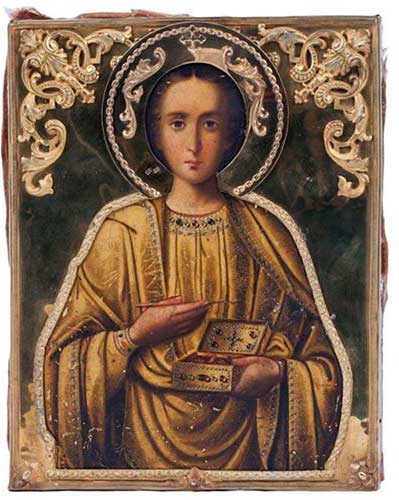
The official Russian Orthodox Church, following Nikon's reforms, became increasingly receptive to Western European artistic influences. From the late 17th century onward, State Church icons increasingly incorporated elements of Western religious art, including naturalistic perspective, volumetric modeling, and anatomical accuracy. Icons began to be painted in a style that blended traditional Russian elements with techniques borrowed from Catholic and Protestant European religious paintings and engravings. Some icons were executed in a fully Westernized manner, resembling Italian or Flemish religious paintings rather than traditional icons. This stylistic shift reflected broader cultural changes as Russia under Peter the Great and his successors sought to modernize and Westernize Russian society and culture.
Regional Schools of Russian Icon Painting
The geographical expanse of Russia fostered the development of distinct regional schools of icon painting, each with characteristic styles, techniques, and aesthetic preferences. These schools reflected local artistic traditions, patron preferences, and cultural influences.
Moscow School
After Moscow became the center of Russian political and religious life in the 14th century, it also emerged as a major center of icon production. Moscow school icons are characterized by a harmonious balance between the spiritual transcendence of Byzantine models and the emotional warmth of Russian sensibility. Moscow iconographers favored balanced compositions, refined drawing, and a sophisticated color palette that often included rich reds and deep blues. The school reached its apex with Andrei Rublev, whose icons exemplify spiritual depth combined with visual harmony. Moscow icons often featured more complex theological programs than those of other regions, reflecting the intellectual environment of the metropolitan center and its close ties to monastic communities known for theological scholarship.
Yaroslavl and Vladimir-Suzdal Schools
The Yaroslavl school, flourishing particularly in the 16th and 17th centuries, developed a distinctive style characterized by narrative richness, decorative detail, and bright colors. Yaroslavl icons often included elaborate architectural backgrounds and landscape elements, with multiple scenes shown within a single icon. The painters of this school frequently incorporated local architectural features and cultural elements, creating a localized visual language. The Vladimir-Suzdal school, with origins in the 12th century, developed a style combining monumentality with lyrical expression. Icons from this region often featured elongated figures with small heads, creating a sense of otherworldly elegance. The use of light, luminous colors created a serene, contemplative mood distinctive to Vladimir-Suzdal work.
Stroganov School
The Stroganov school, named after the wealthy merchant family that patronized it, developed in the late 16th and early 17th centuries. It is known for miniaturistic precision, elaborate detail, and technical virtuosity. Stroganov icons often featured complex compositions on relatively small panels, executed with extraordinary attention to fine detail. The painters used thin brushes to create intricate patterns in clothing, architecture, and landscape elements. Their color palette typically combined bright, clear colors with lavish use of gold. The Stroganov school represented a courtly, sophisticated approach to icon painting that appealed to wealthy patrons and connoisseurs, combining traditional iconographic forms with decorative elaboration that showcased the painters' technical mastery.
Russian Icons in Modern Context
The tradition of Russian iconography has endured despite historical disruptions, including the Soviet period's suppression of religious practice. In recent decades, there has been a significant revival of interest in traditional icon painting, both as religious practice and cultural heritage.
Revival of Interest in Traditional Iconography
The fall of the Soviet Union in 1991 sparked a remarkable renaissance of Russian Orthodox religious life, including renewed appreciation for traditional iconography. Churches destroyed or repurposed during the Soviet era have been restored, creating demand for new icons painted according to traditional methods. Icon painting schools and workshops have been established throughout Russia, training a new generation of iconographers in traditional techniques. This revival is not limited to Russia: interest in Russian iconography has spread globally, with workshops and study programs established in many countries. The revival reflects both religious renewal and cultural reclamation, as Russians reconnect with artistic traditions suppressed during the Soviet period. Many contemporary Russian iconographers look consciously to the works of medieval masters like Rublev as models, seeking to recover the spiritual and artistic principles of the tradition's golden age.
Contemporary Icon Painting in Russia
Contemporary Russian icon painting encompasses a spectrum of approaches, from strict adherence to medieval models to more innovative interpretations. Some iconographers work exclusively within traditional parameters, using historical pigments, techniques, and patterns to create icons virtually indistinguishable from their medieval predecessors except for their newer condition. Others explore ways to maintain the theological principles and spiritual purpose of traditional iconography while incorporating subtle contemporary elements or addressing modern concerns. The best contemporary Russian iconographers combine technical mastery of traditional methods with the spiritual understanding necessary to create icons that function as genuine windows to the divine. Contemporary practice is supported by scholarly research into historical techniques and theological principles, creating a revitalized tradition informed by deeper understanding of its foundations.
Preservation Efforts and Museum Collections
The preservation and study of historic Russian icons has become a significant focus for museums and cultural institutions both within Russia and internationally. Major collections at museums like the Tretyakov Gallery in Moscow and the Russian Museum in St. Petersburg provide opportunities to study the development of Russian iconography across centuries. Specialized conservation techniques have been developed to reveal original colors and details hidden beneath centuries of darkened varnish and soot from candles and incense. Digital technologies now allow for detailed analysis and documentation of icon collections, making them accessible to researchers worldwide. These preservation efforts have contributed to deeper understanding of the technical and artistic achievements of Russian iconographers throughout history, informing both scholarly appreciation and contemporary practice of this ancient art form.
Conclusion
Russian iconography represents one of the world's most distinctive sacred art traditions, with roots extending back to the very beginnings of Russian Christianity. From its Byzantine origins in the 10th century, Russian icon painting evolved into a rich and varied tradition with regional schools, master painters, and a sophisticated theological and artistic language. Throughout the upheavals of Westernization, schism, and Soviet suppression, Russian religious icons remained central to Orthodox spiritual practice, serving as windows to the divine that bridged heaven and earth. Today's revival of traditional icon painting is not merely nostalgia for the past but a living continuation of an ancient spiritual practice. As contemporary iconographers master the techniques, symbolism, and theological principles of their predecessors, they ensure this sacred art continues to fulfill its original purpose: making the invisible visible, and creating tangible points of contact between the human and divine.
Quick Takeaways:
- Russian iconography originated in the Byzantine Empire and was brought to Kyivan Rus' with the adoption of Christianity.
- Early Russian iconographers initially followed Byzantine models but slowly developed their own regional styles.
- The Mongol invasion disrupted but also transformed Russian iconography, leading to an emphasis on spiritual resilience and the preservation of tradition in monasteries.
- The Moscow school represented a golden age, producing iconic works like Rublev's "Holy Trinity."
- Western art influenced Russian iconography after the 17th-century church schism, especially in State Church icons, leading to ongoing debates about tradition and change.
- The Soviet era saw the suppression of iconography, but the tradition survived and was revived after the fall of the USSR in 1991.
- Contemporary iconography is diverse, with artists maintaining traditional styles or incorporating new elements while preserving the form's theological foundations.
FAQs:
What is the difference between a Russian icon and a painting?
An icon is not merely a religious painting. It is considered a sacred object, created using specific techniques and symbolic imagery intended for prayer and veneration. The purpose is spiritual rather than aesthetic, and the process of creating one was treated as a form of religious discipline. Unlike a painting, which conveys the artist's personal vision, an icon follows strict canonical rules governing every aspect of its composition, color, and subject matter.
Why are the figures in Russian icons often elongated?
The elongated figures in Russian icons are not meant to be realistic portrayals. They represent the figures' transcendence of the physical world and their existence in a spiritual state. This feature derives from the Byzantine style that shaped early Russian iconography and was deliberately maintained as a signal that icons show transfigured reality, not ordinary human appearance. This departure from naturalism is central to Orthodox icon theology.
What is the significance of gold in Russian icons?
Gold leaf in Russian icons represents the divine, uncreated light of God. It is used extensively in backgrounds and halos to create a luminous quality that seems to emanate from within the icon, symbolizing the presence of the holy and the glory of the heavenly world. This symbolic use of gold sets the sacred image apart from ordinary reality and reflects the Orthodox theological emphasis on divine light emerging from darkness.