Quick Answer
Socialist Realism was the official art doctrine of the Soviet Union from 1932 to 1988, proclaimed at the First Congress of Soviet Writers in 1934. It required artists to depict reality in its revolutionary development, using academic realist technique to show heroic workers, soldiers, and leaders serving the Marxist-Leninist cause. Isaak Brodsky‘s Lenin portraits and Vera Mukhina‘s sculpture Worker and Kolkhoz Woman remain its most recognized images. No written stylebook existed; enforcement came through state unions, juries, and commissions rather than a fixed set of rules.
What Is Socialist Realism?
Socialist Realism was the Soviet Union’s official cultural doctrine from 1932 to 1988, later adopted by other communist states after World War II. Socialist realism was proclaimed at the First Congress of Soviet Writers in 1934 as the only acceptable method for Soviet art in every medium, from painting and sculpture to film and literature. The stated goal was to depict reality in its revolutionary development: artists were to show life not as it was but as socialism promised it would become. In practice that meant clear, legible narratives about workers, soldiers, and Communist Party leaders, painted in a technique borrowed from academic realism rather than the abstraction and experimentation of the preceding decade. Isaak Brodsky’s portraits of Lenin and Vera Mukhina’s towering steel sculpture Worker and Kolkhoz Woman remain its two most recognizable faces.
From Avant-Garde Experiment to State Doctrine
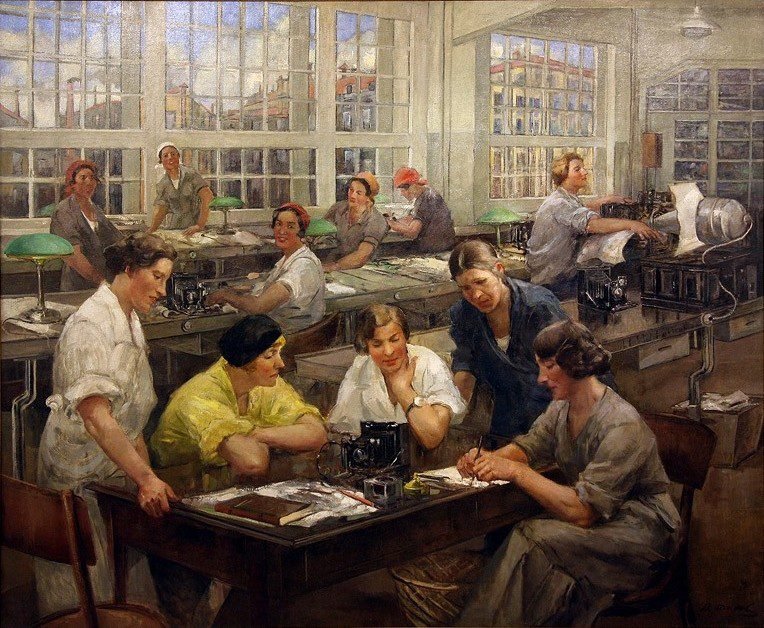
The years right after the 1917 revolution were a period of genuine artistic experimentation. Suprematism, Constructivism, and other avant-garde movements were treated as fitting expressions of a new society. That openness narrowed through the late 1920s as the Communist Party moved to bring cultural production under direct control. A 1932 Party decree dissolved the independent artist and writer associations that had proliferated during the 1920s, folding their members into single centralized unions for each republic and discipline. Vitaly Tikhov’s Stakhanovite from OGPU Plant (1931) shows the new visual language already forming before it had a name: a labor hero rendered with solid, confident realism and quiet dignity, anticipating the heroic worker portraits that would define the coming decade.
The 1934 Congress: How One Doctrine Became Law
The First Congress of Soviet Writers convened in Moscow in 1934 and formally adopted Socialist Realism as policy, a decision Maxim Gorky helped shape as the Congress’s presiding figure. What began as a directive for literature was quickly extended to painting, sculpture, architecture, and cinema, becoming the only officially sanctioned method for Soviet cultural production of any kind for over five decades. Scholars still debate how rigidly the doctrine was enforced at different points. Policing tightened sharply under Stalin and loosened considerably after his death in 1953, so the same nominal rule produced very different results decade to decade. What stayed constant was the expectation that art serve Marxist-Leninist ideology openly rather than through ambiguity or private symbolism, a principle summarized in reference works such as the Britannica entry entry on the movement.
What Makes a Painting Socialist Realist?
Several recurring features mark the style. Compositions favor clear, single-glance narratives over ambiguity. Figures are painted with solid academic modeling rather than flattened or abstracted forms, and subjects skew toward labor, the collective farm, the factory floor, or the battlefield rather than private or domestic life. Color and lighting tend toward an optimistic, sunlit register even in scenes of hardship. Vasiliy Kostyanitsyin’s Kolkhoz Woman (1930s) is a straightforward example: a single idealized farm laborer, rendered plainly and without irony, standing in for an entire class of Soviet citizen.
Did Socialist Realism Have Official Rules?
No. The doctrine’s founding language, to depict reality in its revolutionary development, was never accompanied by technical guidelines on style, color, or subject. Artists absorbed the acceptable look through art school training, jury feedback at state exhibitions, and watching which works got rejected, rather than from any published manual.
Isaak Brodsky and the Cult of Leadership Portraiture
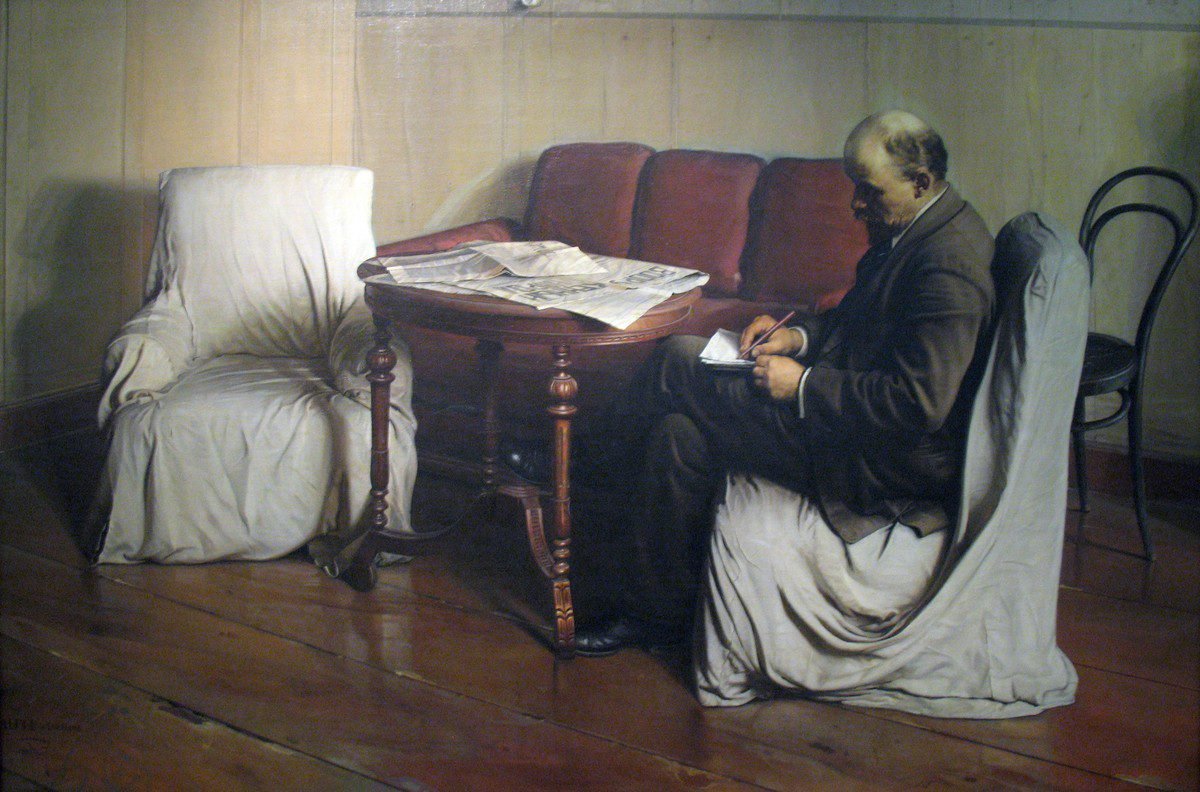
Isaak Brodsky (1884 to 1939) trained in the academic realist tradition under Ilya Repin before the revolution, a lineage that gave his later Soviet work its polished, traditional finish. He became the era’s most reliable portraitist of Vladimir Lenin and other Soviet leaders, and his paintings are frequently cited as blueprint examples of the Socialist Realist style. His best known canvas, Lenin in Smolny (1930), shows the leader alone at a plain writing table, coat still buttoned: a deliberately restrained image rather than an overtly triumphant one. The painting hangs in the State Tretyakov Gallery in Moscow. Brodsky’s authority within Soviet art institutions meant his particular blend of nineteenth century technique and twentieth century subject matter effectively became the house style other painters were measured against.
Vera Mukhina and the Sculpture of Labor
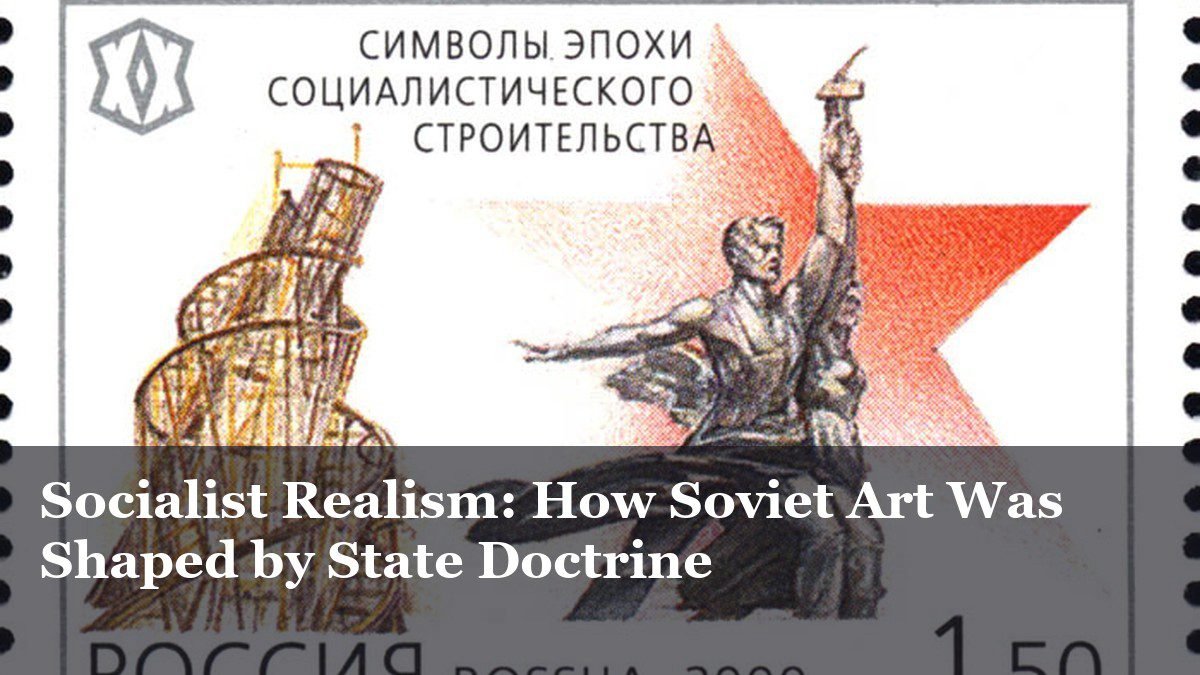
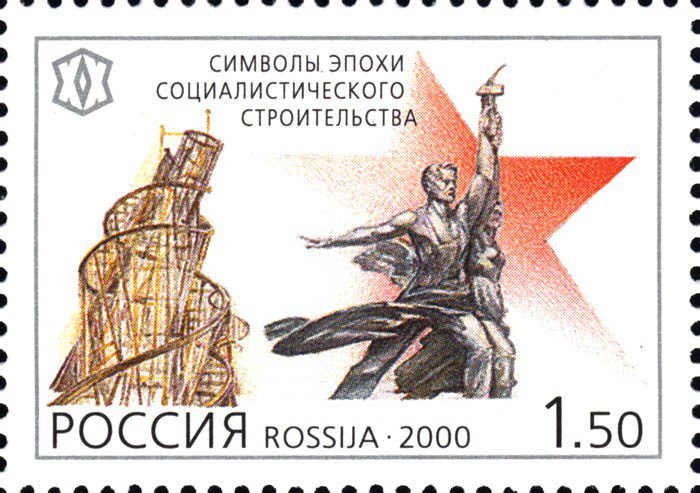
Vera Mukhina (1889 to 1953), nicknamed the queen of Soviet sculpture, belonged to the Four Arts association in Moscow and Leningrad before it too was dissolved in 1931 under the same centralizing pressure that reshaped painting. Her defining work is Worker and Kolkhoz Woman, created with architect Boris Iofan for the Soviet Pavilion at the 1937 Paris International Exposition. Standing 24.5 meters tall in stainless steel, the two figures raise a hammer and sickle together, their fabric streaming horizontally behind them. The sculpture was later moved to Moscow, where it remains a defining civic landmark.
Why Does Worker and Kolkhoz Woman Look Like an Art Deco Statue?
Because it genuinely is one. Scholars classify the sculpture as Socialist Realism executed in an Art Deco aesthetic, sharing the streamlined, forward-thrusting silhouette that defined pavilion sculpture across Europe and America in the 1930s, even while its ideological message stood in direct opposition to the capitalist pavilions it stood beside in Paris.
Boris Ioganson and the Painting of Revolutionary Struggle
Boris Ioganson (1893 to 1973) rose through the Soviet art establishment to become President of the USSR Academy of Arts from 1957 to 1962 and First Secretary of the Union of Painters from 1965 to 1968, giving him direct influence over which artists received commissions and prizes. His painting Interrogation of the Communists (1933) depicts captured Bolsheviks facing hostile officers, using dramatic light and shadow drawn from academic history painting to stage a clear moral contrast between the defiant prisoners and their interrogators. The work was held up for decades as a model of how Socialist Realism should handle historical subject matter, pairing a legible political message with technically accomplished, traditional painting.
Aleksandr Deyneka and the New Soviet Body
Aleksandr Deyneka (1899 to 1969) is regarded as one of the most important Russian modernist figurative painters of the first half of the twentieth century, known for athletic, streamlined figures of workers, athletes, and aviators. His painting Collective Farmer on a Bicycle (1935) has been described as exemplifying the Socialist Realist style, showing a young woman riding through open countryside with the same confident, forward motion Deyneka gave his industrial and sporting subjects. His earlier work carried clear traces of Constructivist design and graphic economy, and tracing how that vocabulary softened into the more conventional realism the doctrine demanded shows just how much personal style artists had to negotiate away, even artists the state ultimately celebrated.
Arkady Plastov and the Poetry of the Kolkhoz
Arkady Plastov built his reputation on scenes of rural collective farm life painted with an observational warmth that set his work apart from the stiffer urban propaganda painting of the period. Tractor Drivers’ Supper (1951) depicts farm workers pausing for a meal at dusk, rendered in a warm, dust colored palette that reads more like sincere genre painting than didactic messaging. The painting still fulfills the doctrine’s basic requirements, labor, collective life, an optimistic tone, but it shows that rural Socialist Realism could carry real tenderness and specific, closely observed detail rather than pure ideological shorthand.
Myth vs. Fact: Was there a rulebook?
Myth: Socialist Realist painters worked from a detailed official style guide. Fact: the entire founding directive, adopted in 1934, was the phrase to depict reality in its revolutionary development. No document specified brushwork, color, or composition. Artists learned the acceptable look through juries, art school training, and which paintings got rejected from exhibitions, not through written rules.
Other Voices: Grekov, Korzhev, and the Genre Painters
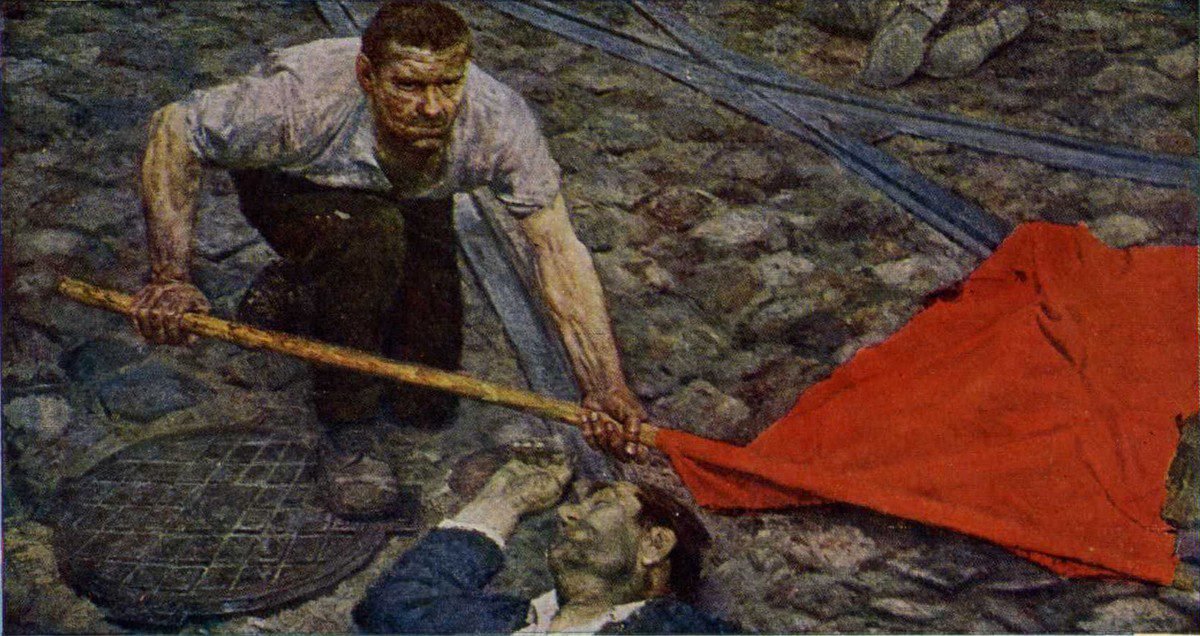
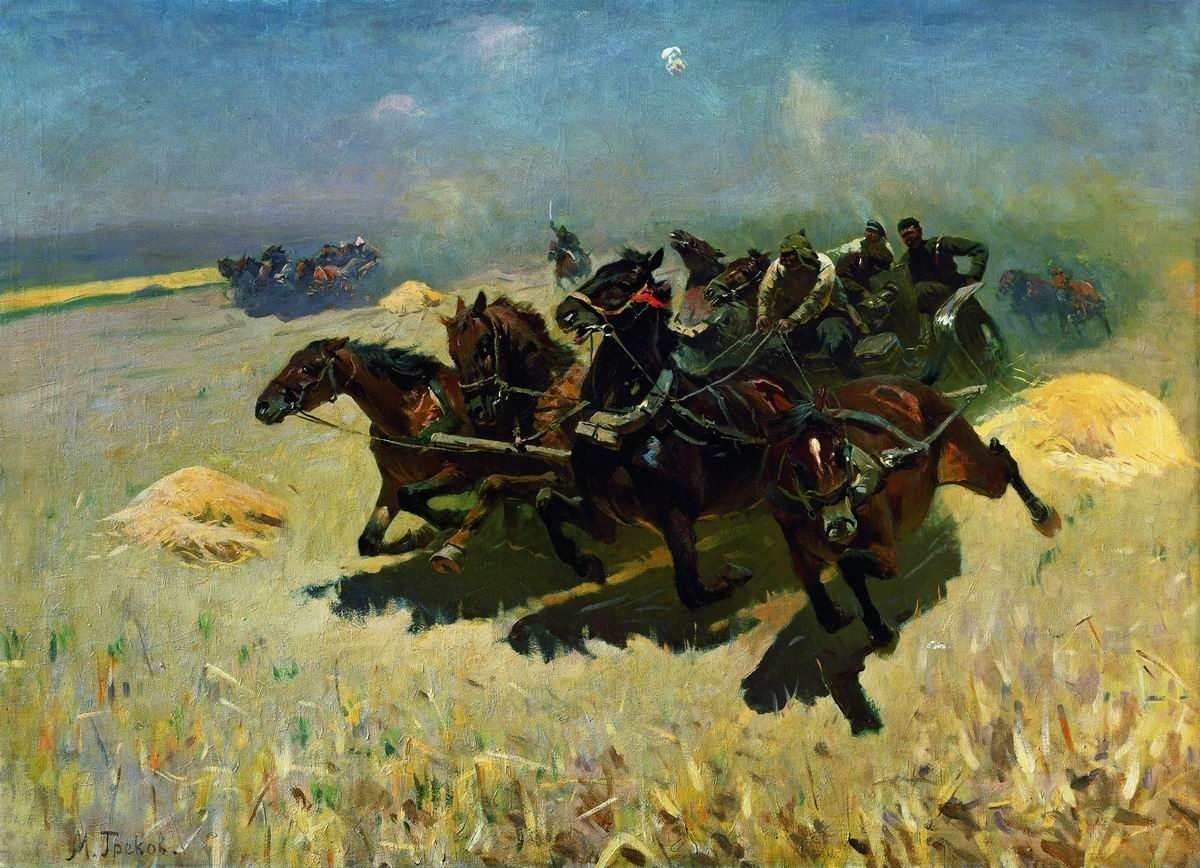
Mitrofan Grekov founded what became the Studio of Military Artists, and his painting Tachanka (1933) depicts a machine gun cart charging across open steppe during the Civil War, setting a template for battle painting that Soviet military artists followed for generations. Decades later, Geliy Korzhev, part of the so called Severe Style generation, painted Raising the Banner (1960), the central panel of his Communists triptych. Compared with Brodsky or Ioganson’s polished 1930s work, Korzhev’s brushwork is heavier and more textured, and his figures carry a rawer, more psychologically weighted heroism, proof that the doctrine’s basic vocabulary, a clear subject, a legible act of sacrifice or resolve, could still evolve stylistically long after Stalin’s death.
The Machinery Behind the Art: Unions, Commissions, and Censorship
Socialist Realism was enforced through institutions, not just expectation. The Union of Artists of the USSR and its republic level branches controlled exhibition space, materials, studio access, and state commissions, so there were effectively no private galleries or independent dealers an artist could turn to instead. Juried exhibitions decided which paintings the public saw and which artists received prizes, housing, and further commissions. Success within this system depended less on private artistic conviction than on producing work a jury of peers and officials would approve, which is why so much Socialist Realist art shares recognizable compositional habits across otherwise very different painters.
Careers Made and Broken Under the Doctrine
The doctrine’s institutional power cut both ways. Artists like Brodsky and Ioganson accumulated real influence, prizes, and comfortable careers by working within the approved style. Others fared far worse. Kazimir Malevich, the founder of Suprematism, was pressured to abandon abstraction in his later years and returned to figurative peasant subjects to remain professionally viable. This history is worth tracing case by case rather than as one uniform story: some artists adapted with little apparent personal conflict, while others experienced real professional exile, and scholars continue to debate how much individual belief versus institutional survival shaped any given artist’s compliance.
Socialist Realism Beyond the USSR
In the aftermath of World War II, Socialist Realism was adopted as official cultural policy by communist governments across Eastern Europe, including Poland, East Germany, Czechoslovakia, and Hungary, and later by China, North Korea, Vietnam, and Cuba. Each country adapted the same basic visual grammar, heroic labor, legible narrative, academic technique, to its own revolutionary history and national heroes, which is why a Chinese propaganda poster from the 1950s and a Soviet factory painting from the 1930s can look strikingly similar in structure despite depicting entirely different people and events.
The End of the Doctrine and Its Long Shadow
Enforcement had already loosened considerably during the Khrushchev era Thaw of the late 1950s and 1960s, giving artists like Korzhev room to develop a rougher, more personal variation on the approved style. The doctrine’s formal end came in 1988, during Mikhail Gorbachev’s glasnost and perestroika reforms, when the state cultural apparatus that had enforced it for over half a century was dismantled along with much of Soviet institutional life.
When Did Socialist Realism End?
Officially in 1988, though its grip on artists had been weakening for decades before that, especially after Stalin’s death in 1953 loosened the strictest enforcement.
Common Misconceptions About Socialist Realism
It is a common misconception that all Socialist Realist art was crude propaganda poster work. In practice, quality and subtlety varied enormously between a mass produced agitprop print and a carefully composed canvas by Plastov or Deyneka. It is also inaccurate to describe the style as simply photographic. Painters selectively used academic conventions, staged lighting, and idealized proportion rather than copying observed reality directly. Nor was the doctrine unique to the Soviet Union, since other communist states adopted their own versions after 1945. Perhaps most persistently, many assume a detailed official rulebook existed, when in fact enforcement ran through juries and institutions responding to a single vague directive.
Legacy: From Sots Art to Museum Walls Today
In the 1970s and 1980s, artists Vitaly Komar and Alexander Melamid founded Sots Art, a movement that deliberately parodied Socialist Realist imagery and slogans, treating the style’s visual habits as ready made material for irony rather than sincere belief. Since the Soviet collapse, museums have increasingly presented these works as historical artifacts documenting a specific political and artistic period rather than as active propaganda, and international academic interest in the movement has grown steadily.
Where Can You See Socialist Realist Art Today?
Major holdings include the State Tretyakov Gallery and State Russian Museum, along with regional collections such as the Deyneka gallery in Kursk, and these works also travel regularly in international exhibitions on Soviet and twentieth century art.
How Socialist Realism Connects to Other Movements
Socialist Realism’s technical roots trace back to the nineteenth century Wanderers, the realist movement that trained Ilya Repin, who in turn taught Isaak Brodsky, giving the Soviet doctrine a direct stylistic lineage stretching back before the revolution. It stood in deliberate opposition to the Suprematism and Constructivism it displaced in the early 1930s, movements that had prioritized abstraction and formal experimentation over legible narrative. Beyond the Soviet context, art historians often compare it to the officially approved realist styles promoted in Nazi Germany during the same decades, a useful comparison for understanding how different totalitarian states used remarkably similar mechanisms of juried control even while pursuing opposite political ideologies. Its influence also reached Chinese Communist art after 1949, where Soviet trained painters carried the same visual grammar into a new national context.
Essential Points
- Socialist Realism was the Soviet Union’s sole official cultural doctrine from 1932 to 1988, proclaimed at the First Congress of Soviet Writers in 1934.
- No formal stylistic rulebook ever existed, only the vague directive to depict reality in its revolutionary development.
- Isaak Brodsky’s repeated portraits of Lenin, including Lenin in Smolny (1930), set the visual template for Soviet leadership imagery.
- Vera Mukhina’s Worker and Kolkhoz Woman (1937) fused socialist iconography with an Art Deco sculptural language.
- Control ran through the Union of Artists, exhibition juries, and state commissions rather than private galleries or dealers.
- The style grew out of nineteenth century Wanderers realism and displaced earlier avant-garde movements like Suprematism and Constructivism.
- After World War II, other communist states adopted the doctrine, adapting its visual grammar to local heroes and history.
- The doctrine formally ended in 1988, but its imagery still shapes Russian museum collections and later movements like Sots Art.
Frequently Asked Questions
- What is socialist realism in simple terms?
- Socialist Realism was the Soviet Union’s official art style from 1932 to 1988. Artists had to show workers, soldiers, and leaders in a realistic but idealized way that promoted Marxist-Leninist ideology, favoring clear, optimistic scenes of labor and progress over abstraction or ambiguity.
- When did the Soviet Union make socialist realism official?
- The doctrine was proclaimed at the First Congress of Soviet Writers in 1934, though the Communist Party had already begun centralizing artistic organizations in 1932. It remained the only officially sanctioned method for Soviet art until 1988.
- What does the hammer and sickle in Worker and Kolkhoz Woman symbolize?
- In Vera Mukhina’s 1937 sculpture, the male worker raises a hammer and the female kolkhoz woman raises a sickle, and together their raised arms form the Soviet hammer and sickle emblem, uniting industrial and agricultural labor into a single national symbol.
- Why did Isaak Brodsky paint Lenin so many times?
- Brodsky’s academic training under Ilya Repin and his access to Lenin gave him a privileged position as the Soviet Union’s unofficial state portraitist. His repeated Lenin paintings, including Lenin in Smolny, became templates other artists were expected to follow.
- Can you still see socialist realist art in museums today?
- Yes. The State Tretyakov Gallery and State Russian Museum hold major collections, along with regional museums like the Deyneka gallery in Kursk. Worker and Kolkhoz Woman still stands as a public monument near VDNKh in Moscow.
This guide was written and reviewed by the rus-art.com editorial team, specializing in Russian art history. We cross-check dates, attributions, and museum holdings against museum and academic sources.