Save to calendar
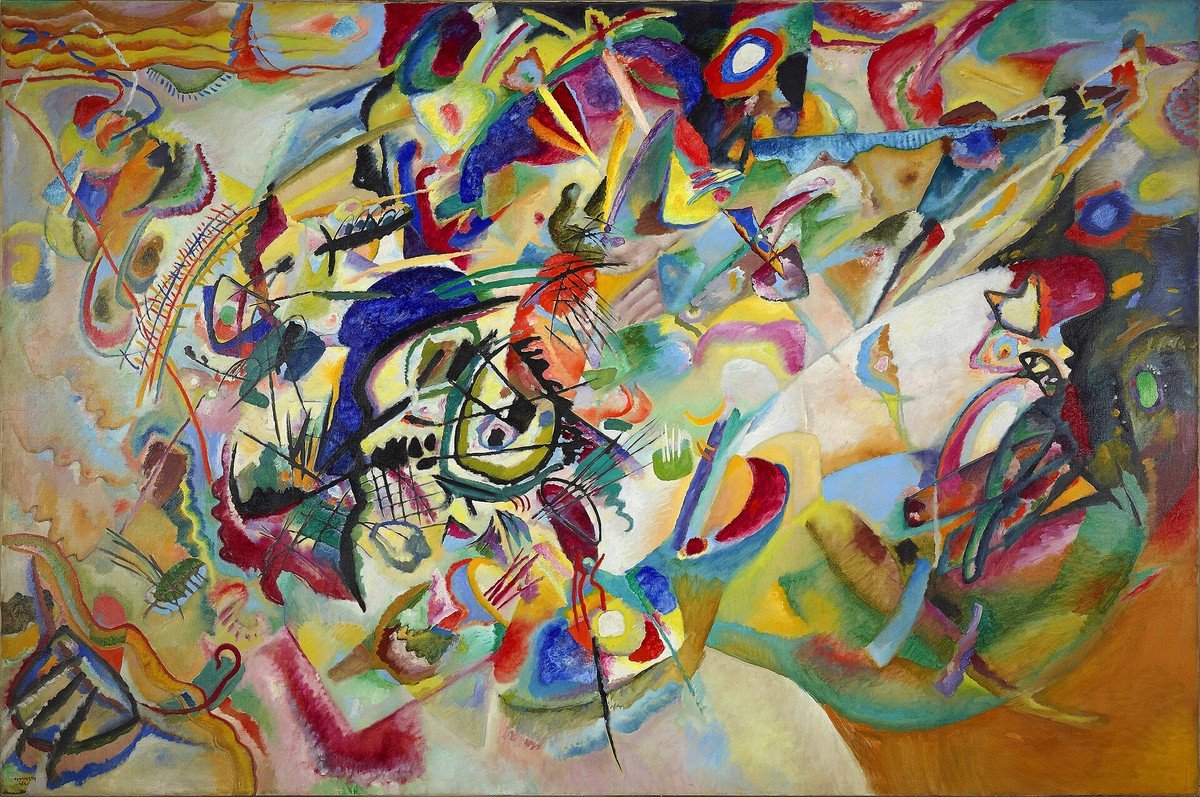
The Doors of the Invisible. Kandinsky, Klee, Malevich in light of the thought of Pavel Florensky puts three pioneers of modern painting beside the Russian icon, and asks what the two have in common. Masterpieces by Wassily Kandinsky, Paul Klee and Kasimir Malevich hang alongside icons and documents, so a viewer can move from a panel of sacred image to a canvas of pure colour and form within a few steps.
The key to the show is the thought of Pavel Florensky on reverse perspective. In the usual Western system, lines converge on a vanishing point inside the picture, and the viewer stands outside looking in. Reverse perspective turns that logic around, as the icon tradition does. The exhibition borrows this idea as a lens, inviting visitors to read abstract painting and icon painting as neighbours rather than opposites.
The three painters give the idea plenty to work with. Kandinsky, born in Moscow, settled in Munich in 1896 and later taught at the Bauhaus from 1922 until the Nazis closed it in 1933. Klee, a gifted draftsman who wrote at length on colour theory, taught at the same school, and his lectures were published in English as the Paul Klee Notebooks. Malevich founded Suprematism in 1915, and his Black Square, first shown at the Last Futurist Exhibition 0,10 in Petrograd, broke decisively with representational painting.
The documents on view add a second layer. They place the paintings in the intellectual world around them, where questions of space, vision and the unseen were debated as seriously as questions of style. Seen this way, the title’s doors of the invisible are the thresholds each artist tried to open, whether through gold-ground panels or through geometry and colour.
Artists on show
- Wassily Kandinsky
- Paul Klee
- Kasimir Malevich
- Pavel Florensky