Quick Answer
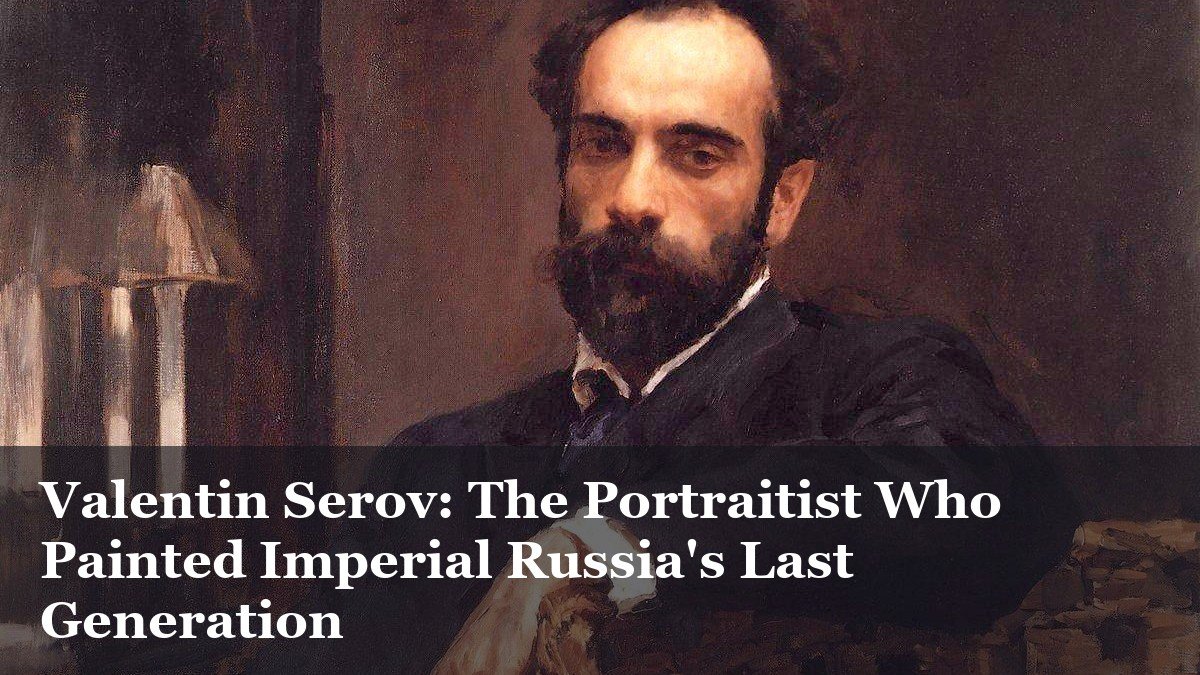
Valentin Serov (1865-1911) was the leading portrait painter of Russia’s Belle Epoque, trained by Ilya Repin and Pavel Chistyakov. His 1887 painting Girl with Peaches, made at the Abramtsevo estate, established him as a fresh voice in Russian art. Over the next two decades he painted merchants, writers, fellow artists, and the imperial family itself, including Nicholas II, capturing the psychological truth of a social order that would not survive the following decade.
What Is a Valentin Serov Portrait?
A Serov portrait is easy to spot once you know what to look for: a sitter caught mid-thought rather than posed, brushwork that stays visible instead of smoothing itself away, and a refusal to flatter. Valentin Serov, active in St. Petersburg and Moscow from the 1880s until his death in 1911, is generally considered the primary portraitist of his generation in Russia. He painted merchants, opera singers, fellow painters, and the last two Romanov emperors with the same searching attention, which is exactly why his work still reads as reportage rather than ceremony. Unlike the formal court painters who came before him, Serov treated a royal sitting and a child’s portrait as the same problem: find the truth of the face in front of him.
A Composer’s Son: Serov’s Early Life and Training
Serov was born on 19 January 1865 in St. Petersburg into a household already steeped in art. His father, Alexander Serov, was a prominent opera composer. His mother, Valentina Serova, was a composer and pianist in her own right. Alexander died in 1871, when Valentin was six, and his mother took him traveling through Europe before the family’s circle of friends pulled him toward painting rather than music. That circle included Ilya Repin, who began informally guiding the boy’s drawing while Serov was still a child and remained his most important teacher. Serov later entered the Imperial Academy of Arts in St. Petersburg, where he studied under Pavel Chistyakov, the same rigorous draftsmanship instructor who had also shaped Repin’s generation. By his teens, Serov was already technically ahead of most academy peers.
Girl with Peaches: Painting That Announced a New Voice
What makes Girl with Peaches so important?
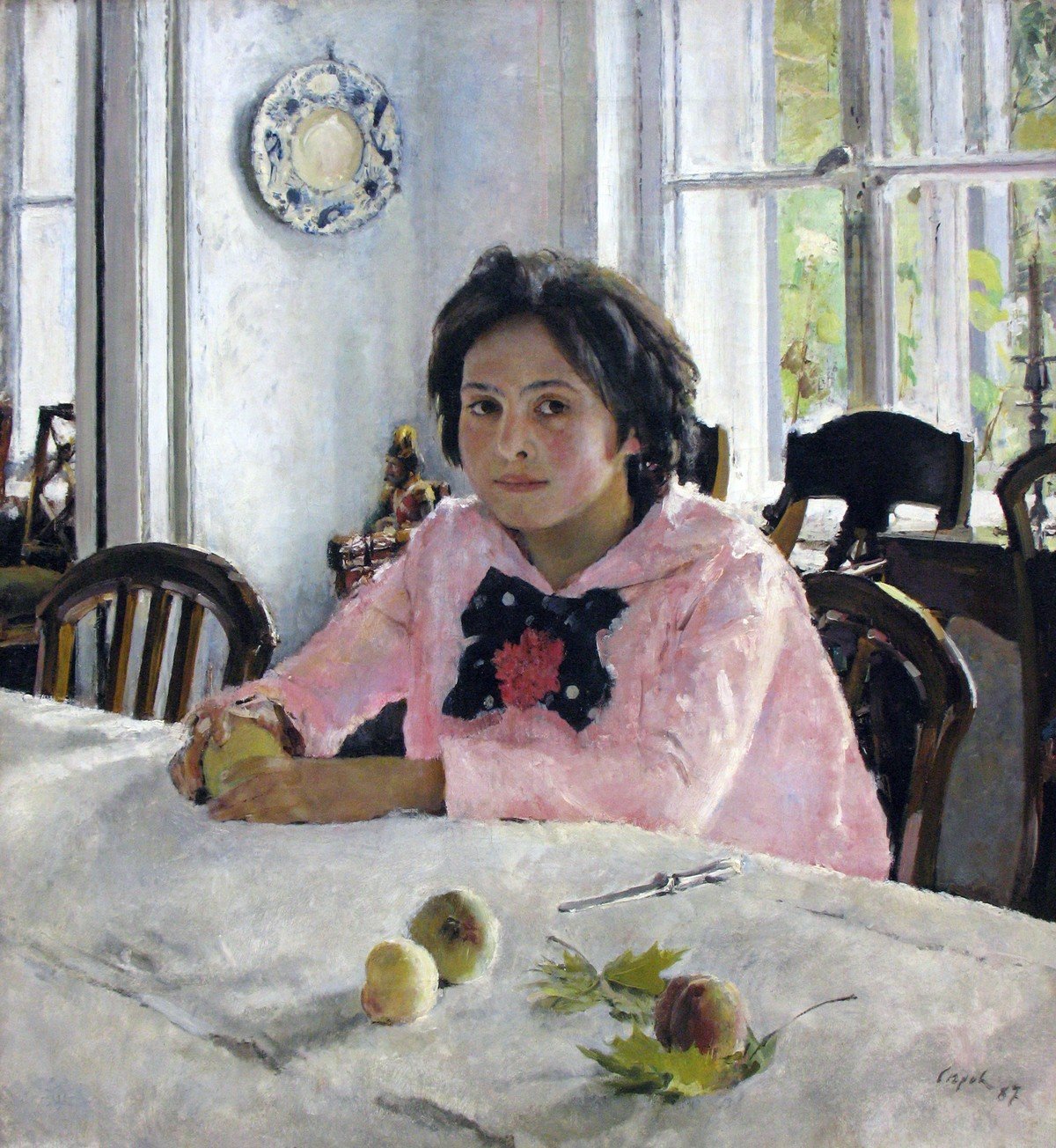
In the summer of 1887, at the age of twenty-two, Serov painted Vera Mamontova, the twelve-year-old daughter of the railway magnate and arts patron Savva Mamontov, seated at a table with a handful of peaches. The result, Girl with Peaches, is built from patches of reflected light on white cloth and skin, brushwork left visibly unblended, and a sitter who looks like she was interrupted rather than arranged. Serov’s friend and biographer, the art historian Igor Grabar, called it “the masterpiece of Russian painting.” The comparison to French Impressionism is obvious in hindsight, but Serov had not yet encountered that movement’s work directly when he painted it. What he had was Abramtsevo’s light, a patient sitter, and roughly three months of daily work to get the picture right.
Summers at Abramtsevo: Serov and the Mamontov Circle
Girl with Peaches was painted at Abramtsevo, a country estate north of Moscow that Savva Mamontov had turned into a working colony for painters, sculptors, and craftsmen. Serov had known the Mamontov family since childhood, and summers there gave him something the Academy could not: informal access to a household full of accomplished people willing to sit for him, and no pressure to produce a finished commission on a fixed schedule. The estate’s Slavophile circle also connected him to composers, singers, and set designers, relationships that later fed his work for the theater and for Sergei Diaghilev’s productions. Abramtsevo worked less as an incubator for a single style than for a method: close observation over long, unhurried sittings, one Serov kept using even after he began painting for the imperial court.
Defining Features of Serov’s Portraiture
Three habits separate a Serov portrait from the academic norm around him. First, he worked from long, repeated sittings, sometimes forty or more, wearing down a sitter’s self-presentation until something more candid showed through. Second, he varied his handling of paint to match the sitter rather than applying one signature finish: thin and quick for some subjects, dense and worked for others. Third, and most consequential for his reputation, he did not flatter. His 1907 portrait of Henrietta Girshman, wife of a Moscow industrialist, shows this balance clearly, an elegant, fashionable woman rendered with enough directness that the picture reads as observation, not commission. Sitters occasionally complained that Serov’s portraits told them things about themselves they had not asked to hear. That’s precisely why patrons kept commissioning him.
Serov and the Peredvizhniki
Was Serov a member of the Wanderers?
Serov exhibited with the Peredvizhniki, the realist cooperative that broke from the Academy’s control over subject matter and exhibitions, but he never fully shared their appetite for social-message painting. Where core Peredvizhniki figures used canvas to argue about peasant hardship or historical injustice, Serov stayed closer to the individual sitter. That did not stop him from working within their orbit of subjects, including Russia’s literary figures. His 1894 portrait of the writer Nikolai Leskov belongs to this tradition of documenting the cultural figures of the day, a practice the Peredvizhniki had normalized and that Repin had modeled with his own portraits of Tolstoy and Mussorgsky. Serov’s version stayed psychological rather than programmatic.
Painting the Court: Serov’s Portraits of Nicholas II
Did Serov actually paint Tsar Nicholas II?
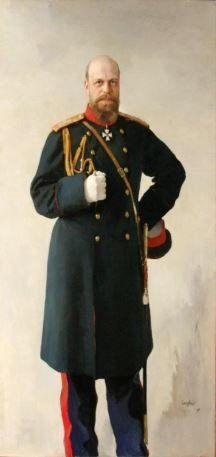
Yes, more than once. Serov received imperial commissions beginning in the 1890s, and his best-known result is a 1900 portrait of Nicholas II wearing a plain officer’s blouse rather than ceremonial dress. Stripped of the usual regalia, it became the image most associated with the tsar’s likeness, reportedly favored within the family itself for looking like the man rather than the office. That directness cut both ways: Serov was reportedly frustrated with a large-scale formal court portrait he was also assigned, finding the ceremonial format resistant to the kind of observation his smaller portraits relied on. The contrast between his stiff, official imperial commissions and his loose, closely observed studies says as much about the limits of court painting as it does about Serov’s own preferences.
The Aristocracy on Canvas: Olga Orlova and High Society
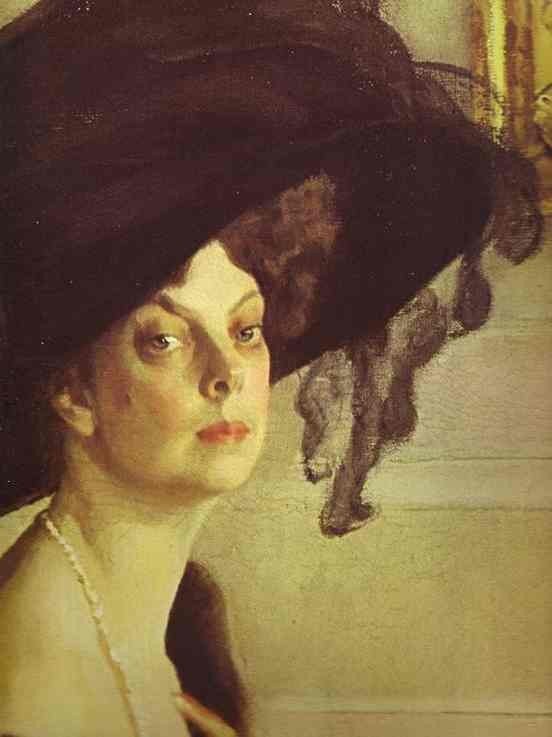
By 1911, Serov’s portraits of the aristocracy had become a kind of visual record of a social class near the end of its run. His portrait of Princess Olga Orlova, painted that year, uses a steep diagonal pose, an enormous hat, and a nearly flattened sense of space, closer to the graphic sensibility of Mir Iskusstva than to his earlier, softer brushwork. Orlova was one of the most fashionable women in St. Petersburg society, and the portrait reads as much as a study of pose and costume as of character, a deliberate shift from the intimacy of his 1880s work. Painted only months before his death, it stands among the clearest signs of where Serov’s style was heading next.
Myth vs. Fact: Not Actually Impressionism
Myth: Girl with Peaches looks so close to French Impressionism that Serov must have been copying Monet or Renoir. Fact: Serov painted it in 1887 without having seen the French Impressionists’ work firsthand. The loose brushwork and dappled light grew out of his own study of light at Abramtsevo, not imported technique.
A Circle of Fellow Painters: Levitan, Vrubel, and Korovin
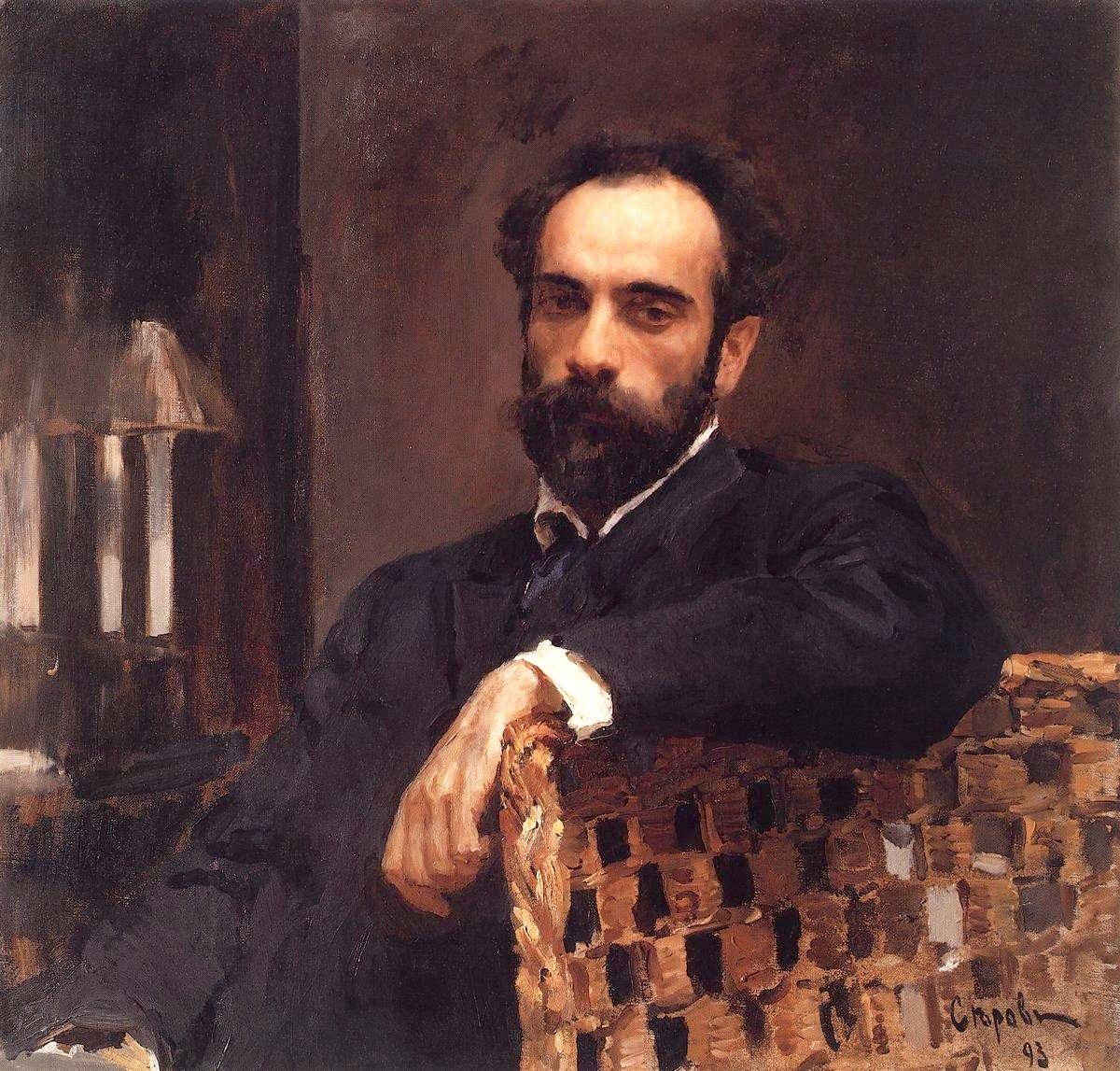
Serov’s closest professional relationships were with artists his own age. He painted a 1893 portrait of Isaac Levitan, the landscape painter and a close friend since their student years, showing him not as a public figure but as a quiet, tired-looking man, consistent with Serov’s habit of painting people he actually knew without ceremony. He also moved in the same circles as Mikhail Vrubel, whose Symbolist visions of demons and swans stood at nearly the opposite end of Russian painting from Serov’s observational realism, and Konstantin Korovin, whose loose, colorist brushwork in Parisian street scenes shared more technical common ground with Serov’s own handling of paint. This loose network of friends and rivals, Serov among them, shaped Moscow’s art world through the 1890s and 1900s far more than any single school did.
Teaching at the Moscow School of Painting, Sculpture and Architecture
From 1897 to 1909, Serov taught at the Moscow School of Painting, Sculpture and Architecture, where his students included Konstantin Yuon and Pavel Kuznetsov, both of whom went on to shape early twentieth-century Russian painting in directions well beyond his own realism. Serov reportedly pushed students toward observation over formula, the same discipline Chistyakov had drilled into him decades earlier, but he did not insist they paint like him. That distinction mattered: a teacher who had built his reputation on unflinching, individualized observation was, by definition, poorly suited to demanding a house style. Several of his students moved toward Symbolism and early modernism during his lifetime, and he appears to have let them.
1905 and a Break with the Academy
In January 1905, troops fired on unarmed demonstrators in St. Petersburg in the event known as Bloody Sunday. Serov, then a member of the Imperial Academy of Arts’ governing council, resigned in protest, a rare political act from an artist whose career depended heavily on imperial and aristocratic patronage. The resignation did not end his court commissions. He continued painting members of the nobility for years afterward, but it marked a public break between the man and the institution that had trained him. It is a useful corrective to any reading of Serov as simply a court painter: he kept working for the world he depicted while refusing to stay silent about how that world was governed.
Late Style: Ida Rubinstein and the Turn to Modernism
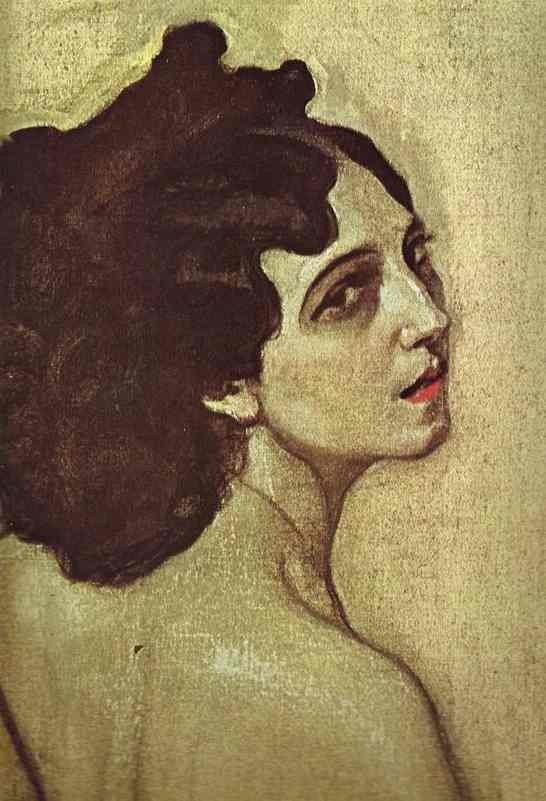
Serov’s 1910 portrait of the dancer Ida Rubinstein, associated with Sergei Diaghilev’s Ballets Russes, is his most radical departure from the naturalism of Girl with Peaches. The elongated, angular nude figure owes more to graphic design and to the era’s growing taste for stylization than to his earlier close observation of texture and light. Serov also designed the well-known poster of Anna Pavlova for the Ballets Russes’ 1909 Paris season, work that put him in direct dialogue with the same Symbolist and Art Nouveau currents reshaping Russian theater design at the time. Seen alongside the Orlova portrait from the following year, the Rubinstein picture shows an artist still changing direction in his mid-forties, not settling into a signature style.
Mythological Departures: The Rape of Europa
A 1907 trip to Greece with the designer Leon Bakst pushed Serov toward mythological subject matter late in his career, most visibly in The Rape of Europa (1910), which reimagines the myth with simplified, almost archaic forms rather than academic classicism. The picture has little in common with his portrait commissions; it reads closer to the decorative flattening seen in Mir Iskusstva circles than to anything in his earlier realist training. For an artist best known for penetrating individual likeness, the Europa paintings are a reminder that Serov spent his final years actively testing the limits of his own reputation rather than repeating it.
Legacy: Serov in Russia’s Museums Today
Serov died suddenly of a heart attack on 5 December 1911 in Moscow, at forty-six. His major portraits, including his 1899 portrait of the gallery founder Pavel Tretyakov, remain centerpieces of the State Tretyakov Gallery, the institution most responsible for preserving his work alongside that of the Peredvizhniki he exhibited with. That the museum’s own founder sat for him is a small but telling detail: Serov painted the people who were actively building Russia’s cultural institutions, not only the aristocrats commissioning his services. His portraits are now read less as court records and more as the most reliable visual account of a social world, merchant patrons, artists, aristocrats, and the imperial family alike, that would not survive the revolutions of the following decade.
Related Movements: Mir Iskusstva and Russian Impressionism
Serov’s career bridges two movements without belonging fully to either. He showed with the realist Peredvizhniki early on, then later associated with Mir Iskusstva (World of Art), the St. Petersburg group led by Alexandre Benois and Sergei Diaghilev that pushed Russian art toward Symbolism, decorative stylization, and closer ties with European modernism. His late portraits of Orlova and Rubinstein sit comfortably in that second context; his 1880s work does not. Art historians sometimes group Girl with Peaches under the loose label of Russian Impressionism, alongside Korovin — a label that fits the surface qualities of the work without capturing how Serov actually got there.
Essential Points
- Serov’s father was the composer Alexander Serov; his mother, a composer and pianist, raised him inside Russia’s artistic elite from childhood.
- Girl with Peaches (1887) was painted at the Abramtsevo estate and shows Vera Mamontova, daughter of the industrialist patron Savva Mamontov.
- Serov trained under Ilya Repin and later Pavel Chistyakov at the Imperial Academy of Arts.
- He exhibited with the Peredvizhniki but never fully adopted their social-message realism, favoring psychological observation instead.
- His 1900 portrait of Nicholas II in a plain officer’s blouse became the portrait most associated with the tsar’s likeness, reportedly favored within the family for its unforced honesty.
- Serov resigned from the Academy of Arts in 1905 in protest after troops fired on demonstrators in St. Petersburg.
- His late portraits of Ida Rubinstein and Princess Olga Orlova (1910-1911) show a shift toward flattened, modernist composition shortly before his sudden death.
- Serov taught at the Moscow School of Painting, Sculpture and Architecture, shaping painters such as Konstantin Yuon and Pavel Kuznetsov.
Frequently Asked Questions
- What is Valentin Serov best known for?
- Serov is best known as Russia’s leading portrait painter of the late 1800s and early 1900s, especially for Girl with Peaches (1887) and his portraits of aristocrats and Tsar Nicholas II, prized for their psychological honesty rather than ceremonial flattery.
- Who taught Valentin Serov to paint?
- Ilya Repin began informally guiding Serov as a child through family connections, and Serov later trained formally under Pavel Chistyakov at the Imperial Academy of Arts in St. Petersburg, gaining the rigorous draftsmanship both Repin and Chistyakov were known for.
- Why does Girl with Peaches look Impressionist if Serov hadn’t seen French Impressionism?
- Serov developed his loose brushwork and interest in reflected light independently at the Abramtsevo estate, through direct observation of sunlight on skin and cloth, arriving at effects similar to French Impressionism without having studied that movement’s actual paintings first.
- Why did Serov resign from the Imperial Academy of Arts?
- In 1905, Serov resigned from the Academy’s governing council in protest after troops fired on demonstrators in St. Petersburg during Bloody Sunday, a political stand unusual for an artist whose livelihood depended heavily on aristocratic and imperial patronage.
- Where can I see Valentin Serov’s paintings today?
- The State Tretyakov Gallery in Moscow holds Girl with Peaches and the Tretyakov portrait; the State Russian Museum in St. Petersburg holds the Orlova and Rubinstein portraits. Both museums display Serov’s work as part of their core Russian art collections.
This guide was written and reviewed by the rus-art.com editorial team, specializing in Russian art history. We cross-check dates, attributions, and museum holdings against museum and academic sources.