Quick Answer
The Hermitage Museum is a state art museum in Saint Petersburg, Russia, holding the largest collection of paintings in the world, over three million items across six historic buildings including the former Winter Palace. Empress Catherine the Great founded it in 1764 by buying paintings from Berlin merchant Johann Ernst Gotzkowsky, though it only opened to the public in 1852. Its holdings span Leonardo da Vinci and Rembrandt to Matisse and Kandinsky, making it one of the world’s most visited museums, with over 2.8 million visitors in 2022.
What Is the Hermitage Museum?
State Hermitage Museum holds the largest collection of paintings in the world, though painting is only part of the story. The museum’s full holdings run past three million items, and only a fraction of them hang on view at any given moment. Roughly a third of that total is coins and medals, not paintings or sculpture, a fact that surprises most first time visitors.
The museum is not one building. It fills six historic structures on Palace Embankment, anchored by the former imperial residence, with four further sites spread across and beyond Saint Petersburg.
What Does ‘Hermitage’ Mean?
The name comes from the French ermitage, meaning retreat. Catherine the Great used it for the small private rooms where she first kept her paintings, back when the collection could still fit in a handful of rooms rather than an entire museum district.
Catherine the Great’s Founding Purchase: How It All Began
Catherine the Great founded the collection in 1764, and she did it by buying an existing set of paintings rather than commissioning new ones. Berlin merchant Johann Ernst Gotzkowsky had assembled 225 paintings to settle a debt with Prussia’s King Frederick II, who turned them down once the Seven Years’ War had drained his treasury. Catherine bought the lot instead: a single transaction, mostly Dutch and Flemish paintings, that became the founding core of a collection now numbering three million items.
She spent the rest of her reign buying entire private European collections rather than individual pictures, which is why the museum’s Rembrandt and Rubens holdings can stand up against those in Amsterdam and Antwerp. The museum still marks this origin every December 7, Saint Catherine’s Day.
Why Did Catherine Collect So Aggressively?
Owning paintings a Prussian king had rejected let Catherine make a point: Russia belonged among Europe’s great powers, and her court could prove it in canvas.
Six Palaces Along the Neva: Mapping the Complex
Six connected buildings on Palace Embankment form the museum’s core. Best known is the Winter Palace, built and rebuilt between the late 1730s and 1837, when a fire gutted much of the interior and craftsmen rebuilt it within a year. At 233,345 square meters, it holds an estimated 1,886 doors, 1,945 windows, and 117 staircases, a scale that reflects its original job: this was the seat from which the tsars governed roughly a sixth of the Earth’s landmass.
Beyond the embankment, the museum also administers the Menshikov Palace, once home to Peter the Great’s favorite, Prince Alexander Menshikov, along with a dedicated Museum of Porcelain and a restoration and storage facility at Staraya Derevnya on the city’s outskirts.
Inside the Winter Palace: Scale and Splendor
Walking the state rooms means covering ground built for an empire, not a household. The Jordan Staircase, with its marble steps and gilded columns, was designed to make foreign ambassadors feel the weight of imperial power before they ever reached the throne room. The Malachite Room, paneled floor to ceiling in green Ural stone, survives largely as it was installed in the 19th century.
Curators face a real tension here. The building is itself a historic artifact, so any painting hung inside has to compete for attention with painted ceilings, parquet floors, and gilded stucco that predate most of the art around it.
What Makes the Hermitage’s Collection Unique?
Scale is the obvious answer, but composition matters more. Coins and medals account for roughly a third of the three million cataloged items, a detail that surprises visitors who assume the total is almost entirely paintings and sculpture. Only a small share of the holdings can be displayed at once; the rest rotates through storage, conservation, or loan.
What separates the painting collection from the Louvre’s or the Prado’s is how it grew: not case by case, but in blocks. Entire private European collections were purchased wholesale across the 18th and 19th centuries, then supplemented after 1917 by nationalized holdings from Russian private collectors. That history is why a single afternoon here can carry a visitor from Italian Renaissance panels to early 20th century French painting.
Leonardo da Vinci at the Hermitage: Two Madonnas
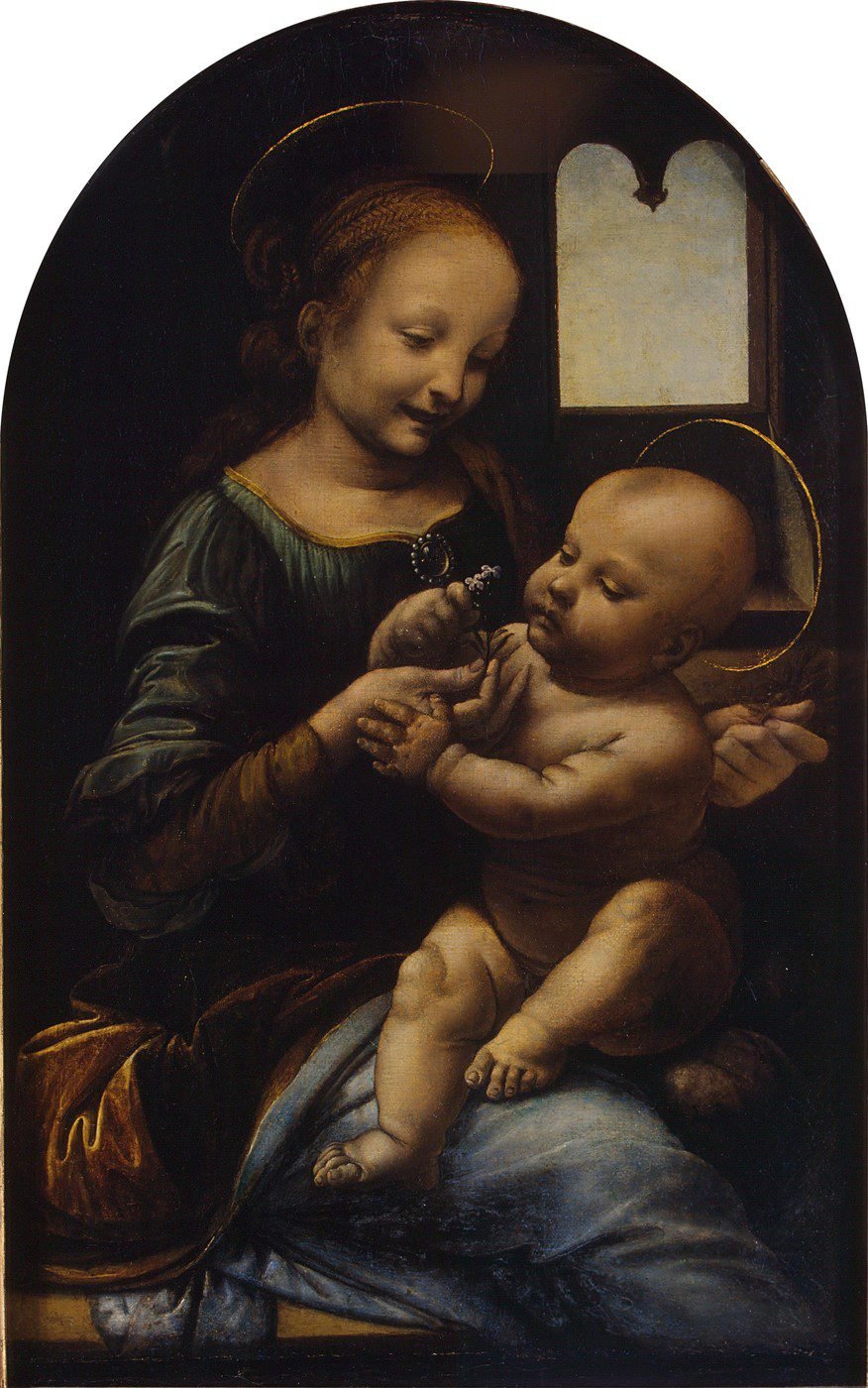
The Hermitage owns two of the small number of paintings universally accepted as autograph works by Leonardo da Vinci: the Benois Madonna and the Madonna Litta. The Benois Madonna, also called Madonna and Child with Flowers, was begun around October 1478 and finished roughly two years later. It shows the Virgin as a young mother playing with her infant son over a cruciform flower, an intimacy that sets Leonardo’s early Madonnas apart from the more formal versions his Florentine contemporaries were painting at the time.
Is the Benois Madonna Really by Leonardo?
Yes, the attribution is considered secure. It is one of two Madonna paintings the young Leonardo began in the same period; the other, the Madonna of the Carnation, now hangs in Munich’s Alte Pinakothek. The Madonna Litta, painted roughly a decade later, draws more debate: many scholars believe Leonardo designed it but handed much of the execution to a studio assistant, possibly Giovanni Antonio Boltraffio.
Titian and the Venetian School: Color as Drama
Where Leonardo builds form through soft transitions of light, Titian builds it through color relationships, and the Hermitage’s Danae shows the difference clearly. Painted in the 1550s, one of several versions Titian made of the same mythological subject, Jupiter visiting Danae as a shower of gold, the canvas sets warm flesh tones against cool gray drapery so the eye keeps moving instead of settling on outline.
Titian ran one of the most productive workshops in 16th century Venice, and the Hermitage’s holdings reflect that: paintings with significant studio participation hang alongside canvases scholars agree are entirely his own hand, a split typical of how Venetian painting was actually produced and sold at the time.
Rembrandt’s Return of the Prodigal Son: A Study in Forgiveness
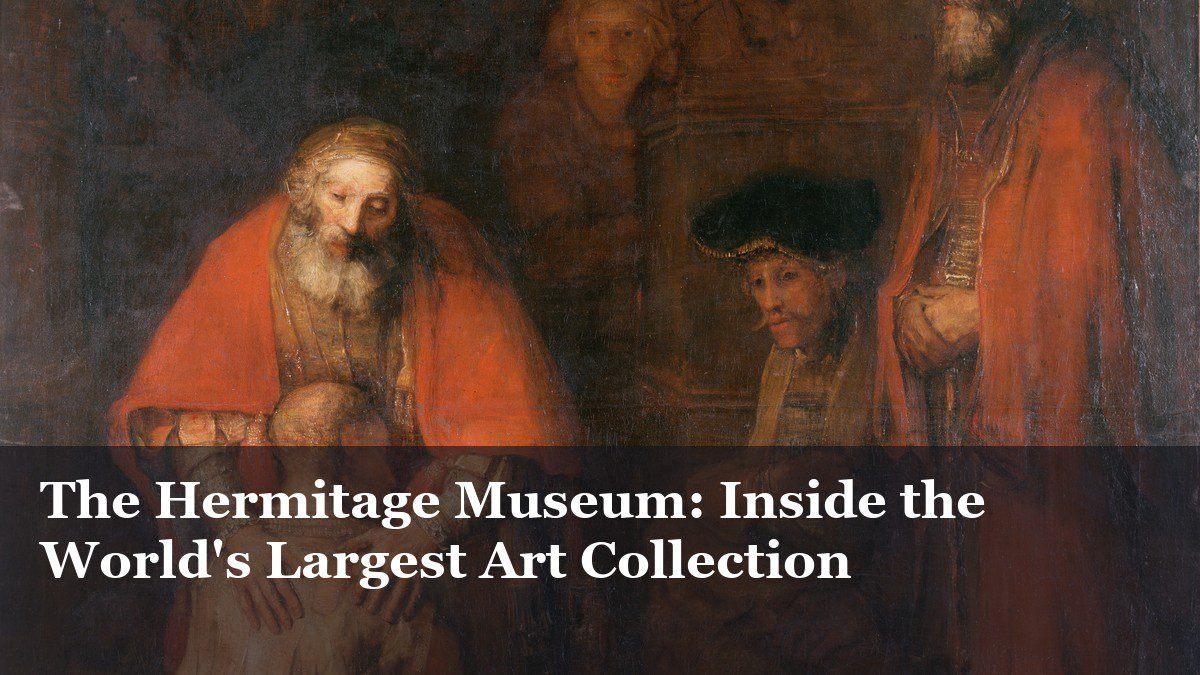
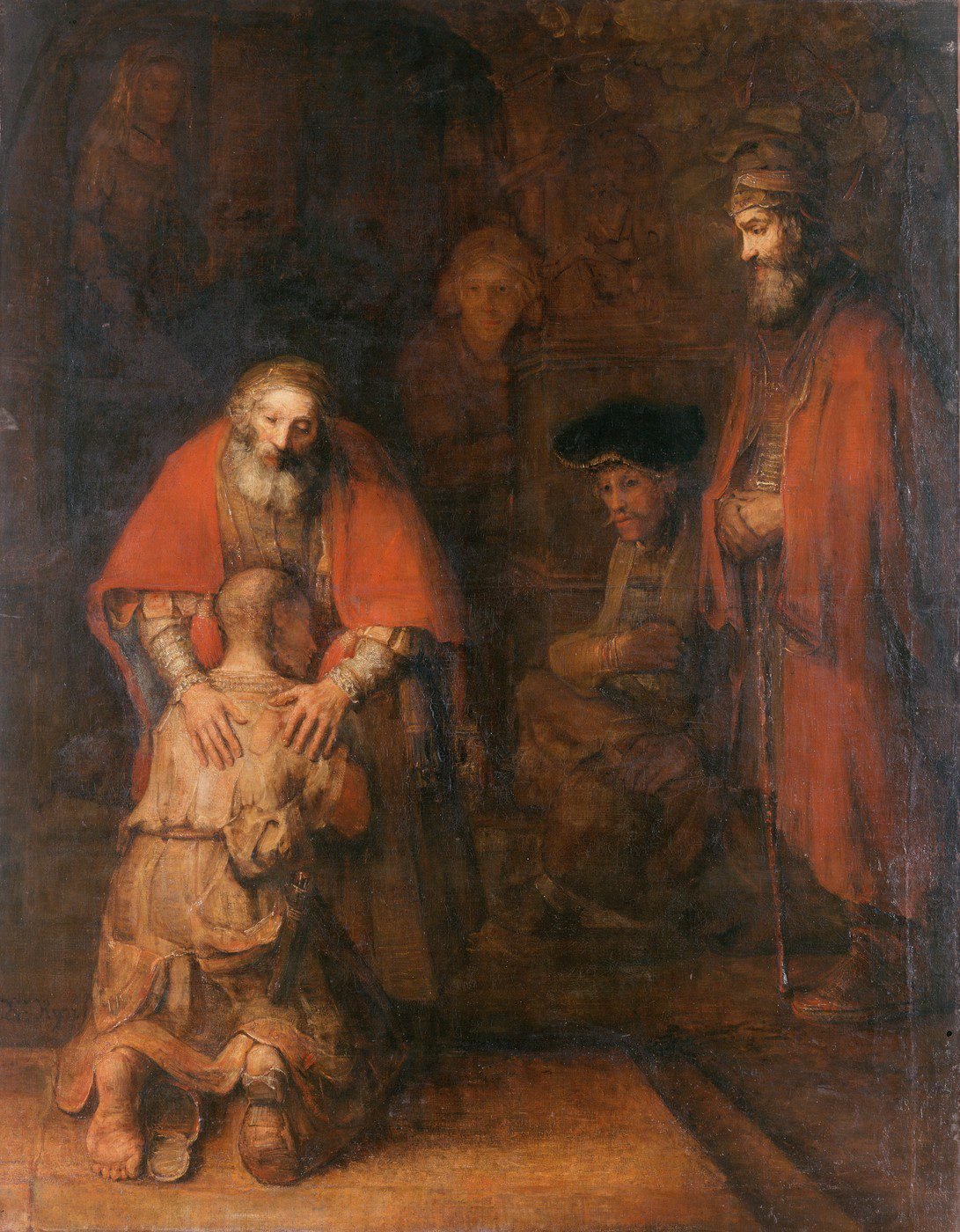
Rembrandt painted the Return of the Prodigal Son around 1668, near the end of his life, illustrating the parable from Luke 15 in which a father forgives the son who squandered his inheritance. Rembrandt strips the scene to four figures and lets nearly the whole canvas sink into shadow, saving the light for the father’s two hands resting on his son’s back and the son’s bare, worn feet.
Why Does This Painting Feel So Different from Rembrandt’s Earlier Work?
By the 1660s Rembrandt had abandoned the crisp detail of his early portraits for a rougher, thickly built paint surface. That texture, paired with a composition emptied of incident, is why historians read this canvas as a meditation on mercy rather than a narrative illustration. It has hung in the Hermitage since entering Catherine the Great’s collection in the 18th century.
Rubens and the Flemish Baroque Rooms
Peter Paul Rubens supplies the Hermitage’s Flemish counterweight to its Dutch holdings. Perseus and Andromeda, painted in the early 1620s, carries the same appetite for movement that defines Rubens’s mythological scenes elsewhere in Europe: Perseus, fresh from beheading Medusa, unchains Andromeda from her rock while cupids swirl around the pair.
Rubens ran his Antwerp workshop like a production house, sketching compositions himself and handing off passages, sometimes whole figures, to specialists in landscape or drapery. His Hermitage paintings, several carrying this kind of workshop input, sit comfortably beside the Rembrandts nearby, since both painters were, in different ways, running large scale operations rather than working alone at an easel.
The Matisse Room: A Moscow Merchant’s Gift to Modernism
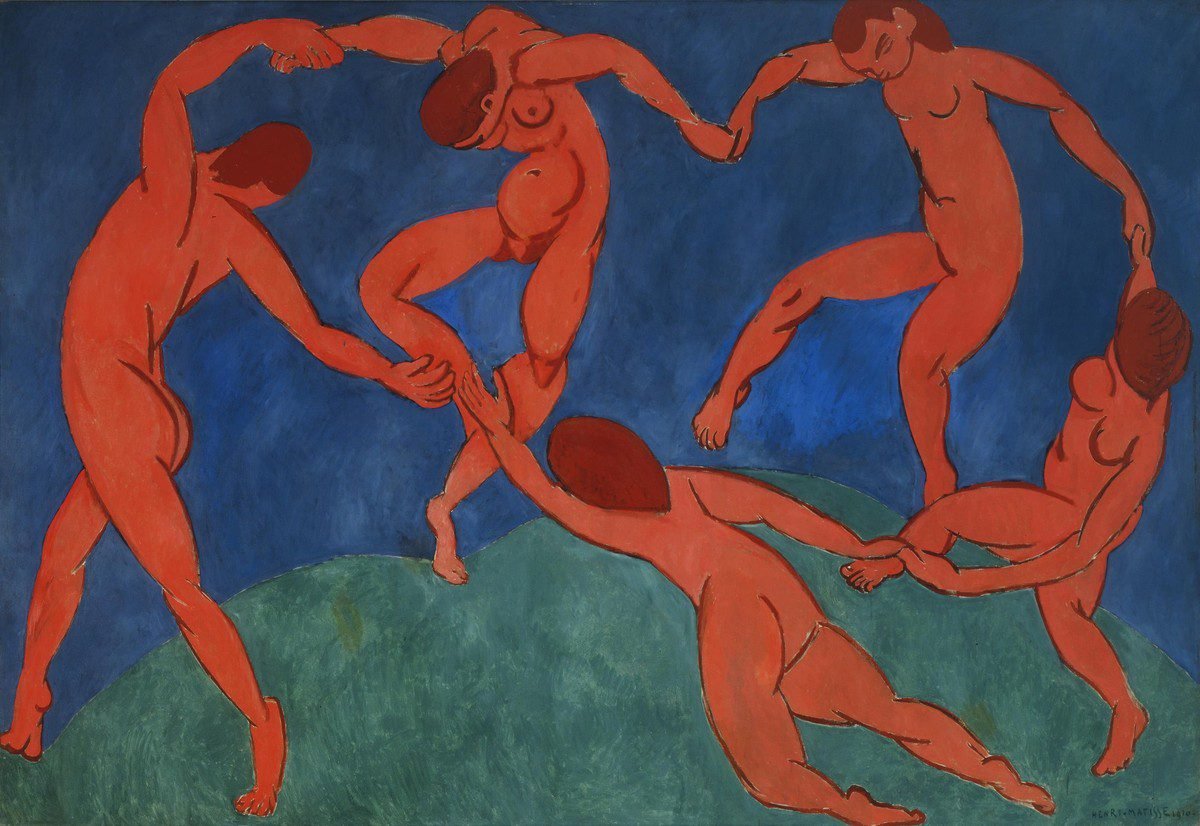
Most of the Hermitage’s French modernist holdings trace back to one collector: Moscow textile merchant Sergei Shchukin, who bought directly from Matisse and Picasso in Paris during the 1900s and 1910s, often before either painter had much of a market outside France. Henri Matisse’s The Dance, painted for Shchukin’s Moscow mansion in 1909 and 1910, shows five bare figures circling in flat orange red against blue and green ground, color used as structure rather than description.
Why Did a Moscow Merchant Buy So Much Matisse?
Shchukin collected against the taste of his own social circle, which mostly preferred academic painting. After the 1917 Revolution the state nationalized his collection; part of it eventually reached the Hermitage, with related works from the same holdings split with Moscow’s Pushkin Museum.
Myth vs. Fact: The Hermitage Is Not Just the Winter Palace
Myth: many visitors assume the Hermitage refers only to the Winter Palace, the building overlooking the Neva. Fact: the museum spans six historic buildings along Palace Embankment, plus the Menshikov Palace, a porcelain museum, and a storage facility at Staraya Derevnya. The Winter Palace is only one wing of a much larger institution.
Kandinsky, Malevich, and the Russian Avant-Garde Wing
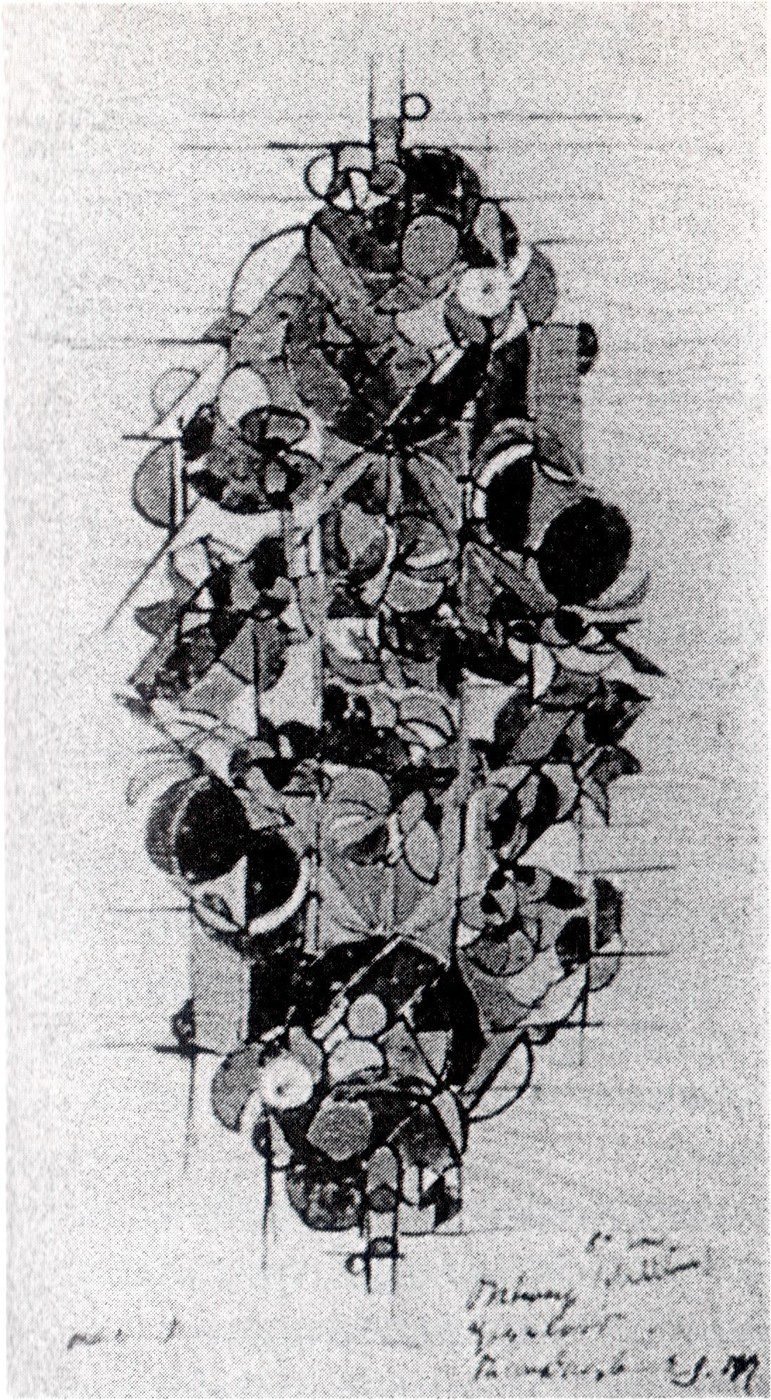
The Hermitage extended into the 20th century through its General Staff Building wing, which shows Russian and European modernism side by side. Wassily Kandinsky’s Composition VI, painted in 1913, marks the point where he had left recognizable subject matter behind in favor of color and form organized by what he called inner necessity rather than resemblance to the visible world.
Kandinsky trained in Moscow before moving to Munich, where he cofounded the Blue Rider group. Kazimir Malevich, working in Moscow and Vitebsk around the same moment, pushed abstraction further, toward the flat geometric planes of Suprematism. Placing their work beside centuries of Old Master painting lets the galleries make an argument on their own: Russian art of the 1910s was in direct conversation with the wider European avant garde, not isolated from it.
Goya’s Rare Presence: Spanish Art at the Hermitage
Spanish painting is thin on the ground in Russian collections generally, which makes the Hermitage’s Francisco Goya holdings notable. The Portrait of the Actress Antonia Zarate, painted around 1810, shows Goya’s late portrait style: a dark, almost bare background, a sitter caught in an unguarded moment rather than a formal pose, and brushwork loose enough to read as modern more than a century before Impressionism.
Zarate was a well known Madrid stage actress in the early 1800s, and Goya painted her more than once. The Hermitage version is one of very few Goya paintings held in Russia, making the gallery a genuine rarity for visitors who want to see Spanish Romanticism’s most important painter without traveling to Madrid or London.
The Storming of the Winter Palace, 1917
On the night of 25 to 26 October 1917 (Old Style), Bolshevik forces entered the Winter Palace and arrested members of the Provisional Government sheltering inside, an event later mythologized in Soviet art and in Sergei Eisenstein’s 1928 film October, though the actual takeover involved far less combat than the film depicts.
The building’s status as a museum complicated the moment. The Winter Palace already housed part of the imperial art collection, and the new Soviet government had to decide almost immediately whether to treat those paintings as loot, as state property, or as a public inheritance. It chose the third option, and the Hermitage absorbed further nationalized private collections in the years that followed rather than being dismantled.
The Great Siege of Leningrad: Saving the Collection
When German forces surrounded Leningrad in autumn 1941, Hermitage staff and volunteers packed and evacuated well over a million objects by rail to Sverdlovsk in the Ural Mountains within weeks, working around the clock as the front closed in. Staff who stayed through the ensuing 900 day siege kept the empty frames hanging on the Winter Palace’s walls, a gesture curators have described as a statement of intent: the paintings would come back, and the frames would be waiting.
The building took direct shelling and bombing damage during the siege, and restoration continued for years afterward. The evacuated collection returned to Leningrad once the war in Europe ended in 1945.
The Attack on Danae: Vandalism and Restoration
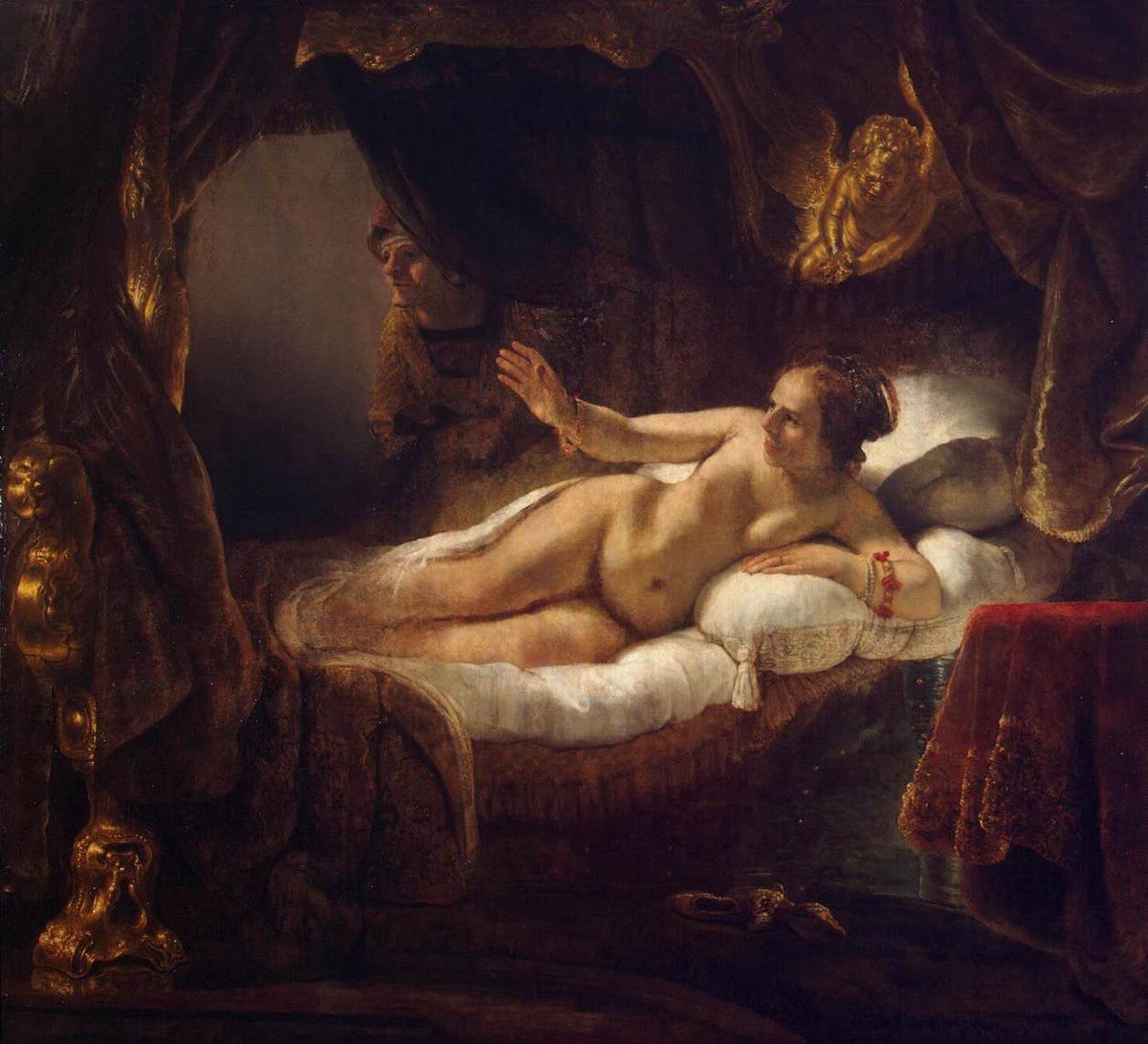
Rembrandt’s Danae, a separate painting from his Return of the Prodigal Son, endured one of the worst attacks on a single artwork in museum history. In 1985 a visitor threw sulfuric acid across the canvas and slashed it twice with a knife, damaging roughly a third of the paint surface within seconds.
Why Was Rembrandt’s Danae Attacked?
The attacker was later found to be mentally ill, motivated by a private grievance rather than any political statement. Hermitage conservators spent over a decade restoring the canvas, complicated by the fact that acid had chemically altered the pigments rather than simply removing them, so restorers often had to work from photographs and technical analysis to judge the original colors. The painting returned to display in 1997, permanently changed but recognizably intact.
From Soviet State Museum to Global Institution
The museum reopened to the public in 1852 as the Imperial Hermitage, decades after Catherine the Great’s death, and remained a court institution until the 1917 Revolution converted it into state property. Soviet administrators expanded its holdings through nationalization but also sold masterpieces abroad during the 1930s to raise hard currency, a decision the museum rarely advertises.
More recently the Hermitage expanded physically, opening galleries in the General Staff Building in 2014 to give its 20th century holdings, including the Kandinsky and Malevich works, dedicated permanent space for the first time. The museum also ran a satellite branch in Amsterdam from 2009 until its closure in 2022, following Russia’s invasion of Ukraine.
Common Misconceptions About the Hermitage
Visitors often expect a single grand building and are surprised to learn the museum spans six structures plus additional branches, a scale closer to a small museum district than one address. Others assume the entire collection stays on permanent view; in practice only a small share of the three million cataloged items is displayed at any time, with the rest in storage, conservation, or on loan.
Is the Hermitage the Same as the Winter Palace?
No. The Winter Palace is one building within the complex, the former residence of the Romanov emperors. The museum grew to occupy it, along with the Small Hermitage, Old Hermitage, New Hermitage, and Hermitage Theatre, but the two names describe overlapping, not identical, things.
How Does the Hermitage Compare to the Louvre and the Met?
By total object count, the Hermitage’s three million items dwarf the Louvre’s roughly half a million and the Metropolitan Museum of Art’s roughly 1.5 million, though the comparison is a little misleading, since a large share of the Hermitage total is coins and medals rather than paintings or sculpture. Its claim to the largest painting collection in the world rests on sheer volume across many schools and periods rather than depth in any single one.
Where the Louvre and the Met built their holdings partly through acquisition committees buying strategically over more than a century, the Hermitage’s core strength comes from the large 18th and 19th century block purchases described earlier, supplemented by the 20th century nationalizations that brought in the Shchukin collection.
Planning a Visit and Why the Hermitage Still Matters
The Hermitage remains genuinely open to the public, ranked among the ten most visited art museums in the world with over 2.8 million visitors in 2022. Most visitors budget a full day for the Winter Palace alone, and many return specifically for the General Staff Building’s modernist galleries, which draw a different, often younger crowd than the Old Masters wing.
What makes the museum matter beyond its size is the range packed into a single visit: a building that once ruled an empire, paintings bought to outbid a Prussian king, and canvases that survived a siege, a revolution, and a vandal’s acid, all standing in the same rooms.
Essential Points
- Founded in 1764 when Catherine the Great bought paintings from Berlin merchant Johann Ernst Gotzkowsky.
- Holds the largest collection of paintings in the world, over three million items in total, about a third of them coins and medals.
- Occupies six historic buildings on Palace Embankment plus four additional sites across Saint Petersburg.
- Opened to the public in 1852, decades after Catherine the Great’s death.
- Houses two of the small number of universally accepted Leonardo da Vinci paintings: the Benois Madonna and the Madonna Litta.
- Survived the 900 day Siege of Leningrad after a rushed 1941 evacuation of over a million objects.
- Celebrates its founding every December 7, Saint Catherine’s Day.
- Ranked among the ten most visited art museums worldwide, drawing over 2.8 million visitors in 2022.
Frequently Asked Questions
- What is the Hermitage Museum known for?
- The Hermitage in Saint Petersburg holds the world’s largest collection of paintings, over three million items in total. It’s known for masterpieces by Leonardo da Vinci, Rembrandt, and Titian, and for its setting inside the former Winter Palace of the Russian tsars.
- When was the Hermitage Museum founded and why?
- Catherine the Great founded it in 1764 by buying 225 paintings from Berlin merchant Johann Ernst Gotzkowsky, who had assembled them for Prussia’s king. She kept adding art privately for decades; the museum only opened to the public in 1852.
- What makes Rembrandt’s Return of the Prodigal Son so powerful?
- Rembrandt paints the scene almost entirely in shadow, letting a single source of light fall on the father’s hands and the son’s ragged back. The rough, built-up paint surface and stripped-down composition focus attention on touch and forgiveness rather than spectacle.
- Did Leonardo da Vinci actually paint the Benois Madonna?
- Yes, scholars broadly attribute the Benois Madonna to Leonardo, painted around 1478 to 1480. It’s one of the earliest secure Leonardo paintings in existence and one of only two Madonna compositions he began that October, the other now in Munich.
- Can you still visit the Hermitage, and has anything changed recently?
- Yes, the museum remains open in Saint Petersburg, though its Amsterdam branch closed in 2022 following the invasion of Ukraine. The Hermitage continues expanding digitally, with online catalogs supplementing in-person visits to its six historic buildings.
This guide was written and reviewed by the rus-art.com editorial team, specializing in Russian art history. We cross-check dates, attributions, and museum holdings against museum and academic sources.

